GOING FORWARD PHOTONIQUE WILL BE ADVERTISMENT FREE
GOING FORWARD PHOTONIQUE WILL BE ADVERTISMENT FREE
Originally Photographed 12 June 2026
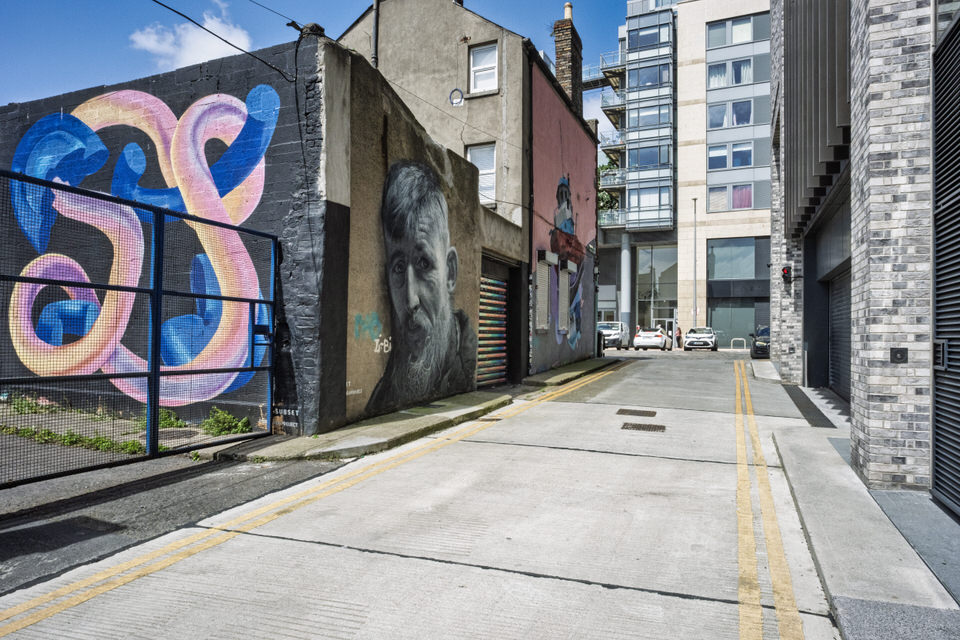
SOME MURALS TO BE SEEN ON THE SIDEWALL
The dynamic intersection of historic urban decay, rapid gentrification, and subcultural expression is perfectly captured at the corner of Burgess Lane and Haymarket in Smithfield, Dublin 7. This exact juncture—once home to the micro-café "Out Of Order"—serves as a living canvas illustrating how Dublin's industrial past transitions into modern, transient consumer spaces.
The History of Burgess Lane and Smithfield Redevelopment
Smithfield has long been a foundational hub of Dublin's working-class commerce. From the 17th century onwards, it operated as the city's primary marketplace for livestock, hay, and straw (Blackett, 2016). Burgess Lane itself is a narrow, historic artery that historically serviced the dense network of malt houses, ironworks, and distilleries—most notably the nearby Jameson Distillery on Bow Street.
For generations, the lane retained a distinctly industrial, gritty architecture characterized by weathered brick boundaries, high blind walls, and cobblestones. However, by the late 20th century, the shift away from livestock trading left the Smithfield area severely neglected and architecturally dilapidated (Blackett, 2016).
The modern identity of the area was irrevocably altered by the Historic Area Rejuvenation Project (HARP) launched in the mid-1990s (Blackett, 2016). This ambitious urban renewal initiative sought to:
Transform the vast, open cobblestone square of Smithfield into an open civic plaza. Attract commercial investment, trendy residential apartments, and legal professionals working nearby at the Four Courts and the Law Society of Ireland. Encourage a "café culture" and creative arts footprint to integrate old industrial structures with contemporary lifestyles.
Street Art on Burgess Lane
As Smithfield gentrified, Burgess Lane evolved from a neglected alleyway into a vibrant, open-air gallery for street art. The side walls of the lane have acted as a shifting exhibition space for prominent Irish and international street artists (such as members of the Subset collective and individual muralists).
Artistic Style and Visual Impact
The art along Burgess Lane has traditionally juxtaposed bold, contemporary graphic styles against the rough, historic textures of old brickwork and concrete plaster. The Themes: The murals often fluctuate between socio-political commentary (a hallmark of the Dublin street art scene), surrealist typography, and vivid abstract portraits. The Context: This street art is structurally tied to the lane's identity. Rather than sanitising the urban space, the murals lean into the alleyway’s raw, subcultural aesthetic. The art directly engages with the passing foot traffic of skateboarders, students from the nearby Technical University Dublin (TU Dublin), and tourists visiting local cultural landmarks.
The Fate of "Out Of Order" Café
I have confirmed that "Out Of Order" has ceased operations.Housed in a uniquely compact, minimalist retail unit right at the corner of the lane, "Out Of Order" was the quintessential independent specialty coffee shop. Featuring striking external branding that seamlessly blended with the adjacent street art, it catered heavily to Smithfield's evolving demographic—serving precision-brewed espresso to local creatives, tech workers, and urban explorers.
Why it Closed
The café fell victim to the hyper-competitive and economically volatile climate that has impacted Dublin’s independent hospitality sector over the last few years. Small-footprint cafés have faced distinct operational vulnerabilities: Skyrocketing Overhead Costs: Exponential increases in commercial energy bills and wholesale coffee bean prices dramatically squeezed profit margins. Transient Footfall: While Smithfield boasts a thriving residential and tourist population, micro-venues rely heavily on high-volume, morning commuter foot traffic (Merrigan, n.d.). The "Gentrification Paradox": The very urban renewal that made a trendy corner café viable also drove up commercial rents to unsustainable levels, ultimately forcing the independent venture to shut its hatches.
Though the coffee machine is turned off and the unit sits quiet, the corner remains a highly photographed spot because the artistic spirit of the lane continues to frame the empty storefront.
* February 2026: High Resolution Images * April 2026: High Resolution Images * May 2026: High Resolution Images