GOING FORWARD PHOTONIQUE WILL BE ADVERTISMENT FREE
GOING FORWARD PHOTONIQUE WILL BE ADVERTISMENT FREE
Originally Photographed 29 June 2026
THE FUJIFILM GFX100RF HAD MOR ISSUES TODAY
* In The Year 2008 * In The Year 2011 * In The Year 2017 * Henrietta Back In 2010
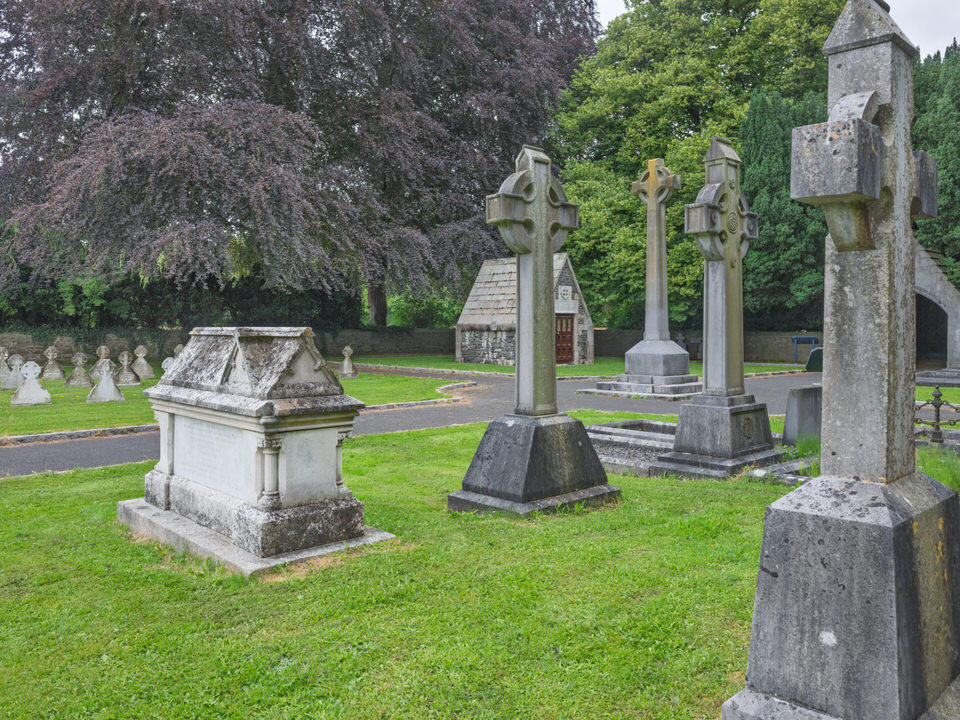
Shadows and History: A Visit to the College Cemetery at Maynooth
Today I decided to visit the town of Maynooth, primarily to test the recent firmware updates I had applied to my Fujifilm GFX100RF. I was under the impression that some of the persistent technical issues I had been experiencing were finally resolved. However, upon arriving at Maynooth railway station, I realised the GPS tagging was still failing to update.
After about two hours of troubleshooting, I finally managed to get the GPS tagging functionality to cooperate. Yet, the moment I arrived at the historic college cemetery, I had to swap out a depleted battery—and the technical headaches returned immediately.
A bit of online digging later revealed a rather frustrating explanation for this quirky behaviour: "When you pop the battery out, the camera completely cuts power to its Bluetooth Low Energy (BLE) standby chip. When the new battery goes in, the camera expects the Fujifilm XApp to proactively re-initiate the background ping. If iOS has put the XApp into a 'deep sleep' in the background to save phone battery, the handshake fails, and the camera either gets no data or resorts to baking in the last cached coordinate it remembers."
Introduction to the Cemetery
The Hidden Cemetery of St Patrick's College
It comes as a surprise to many visitors that St Patrick’s Pontifical University—historically and affectionately known simply as Maynooth College—maintains its own private burial ground. Tucked away on the South Campus past the tranquil Junior Garden, this secluded sanctuary serves as a final resting place for those who dedicated their academic and spiritual lives to the institution.
Although the college was officially established in 1795, the cemetery itself was not laid out until 1817. Its inaugural burial was the Reverend Francis Power (1737–1817), a Waterford-born priest who had fled the turbulence of the French Revolution. He served as the college’s first Bursar and Vice-President, and later as a Professor of French, until his death at the age of eighty. Before the opening of this dedicated plot, the earliest college staff members who passed away were interred at the nearby Laraghbryan Cemetery on the Kilcock Road, just west of the campus boundaries.
Lives Cut Short: Students and Sovereigns
The graveyard is a sobering reminder of the fragile nature of human life in the nineteenth and early twentieth centuries. Alongside distinguished faculty and professors, many young seminarians are buried here. A tragic number of these students succumbed to tuberculosis—then widely known as "consumption"—long before completing their studies for the priesthood. Caring for these ailing young men fell to the Sisters of Charity of St Vincent de Paul, who managed the college infirmary and provided essential healthcare to the isolated campus community. Many of these dedicated nuns are also laid to rest within the quiet cemetery enclosure.
While the cemetery remains a protected historical monument, it still sees occasional modern use for associated clergy and long-serving staff. For many years, the final lay burial was understood to be Maurice Dunne (1939–2009). A native of Tralee, Dunne spent nearly half a century working for the college beginning in 1961, and remarkably passed away on his 70th birthday. However, subsequent visits to the grounds noted more recent grave plots, indicating that this historic space continues to softly record the passage of time.
The Legend of the "Ghost Room"
No history of Maynooth is complete without addressing its most infamous piece of campus lore: the "Ghost Room" of Rhetoric House. Built in 1834, this imposing structure formerly served as a residential hall for trainee priests. Local legend points out a permanently boarded-up top-floor window belonging to Room No. 2, where a dark, malevolent presence supposedly drove students to madness.
The historical record confirms a tragic reality behind the myth. On 1 March 1841, a young student from Limerick named Sean O’Grady fell to his death from the window of Room No. 2. Nineteen years later, on 21 April 1860, another student named Thomas McGinn from Wexford met a similarly tragic end, succumbing to injuries after using a shaving razor and falling from the exact same window.
Following the second death in 1860, the Vice-President of the college, Dr McCarthy, successfully petitioned the Board of Trustees to permanently alter the space. On 23 October 1860, Room No. 2 was officially converted into an Oratory dedicated to St Joseph, the patron saint of a peaceful death. The window was permanently blocked with masonry, and a statue of the saint was installed to guard the room.
Because taking one's own life was viewed as a profound, unforgivable sin in nineteenth-century Catholic Ireland, local lore long claimed these students were cast out and buried outside the campus walls in unhallowed ground. In reality, both young men rest peacefully within the main cemetery boundaries, their graves historically marked and integrated into the fabric of the college's collective memory.
From Penal Laws to the World's Largest Seminary
To truly understand the sheer scale of Maynooth, one must look at its foundational history. St Patrick's Pontifical University (Coláiste Naoimh Phádraig, Maigh Nuad) was established near Dublin by the Maynooth College Act of 1795. Introduced by Thomas Pelham, the Chief Secretary for Ireland, the bill was a strategic political move by the British government during the Penal Era. By funding a domestic seminary, the Crown hoped to prevent Irish priests from travelling to continental Europe for their education, where they might absorb dangerous French revolutionary ideals.
The college quickly expanded to accommodate up to 500 seminarians, ordaining roughly 90 priests annually, and eventually grew to become the largest Catholic seminary in the world. In 1896, a Pontifical Charter granted the institution the status of a Pontifical University, legally empowering it to award degrees in Canon Law, Philosophy, and Theology. Today, this historic pontifical institution seamlessly shares its stunning campus and facilities with the state-run Maynooth University, beautifully bridging Ireland’s ecclesiastical past with modern secular education.
Speculation and Truth: The Burial of Bishop Casey
During a return visit to the college graveyard, an encounter with an elderly gentleman raised an intriguing piece of contemporary speculation. He suggested there was a strong likelihood that the remains of the late Bishop Eamonn Casey would be reinterred in the Maynooth grounds if they were ever removed from the crypt of Galway Cathedral.
While the gentleman's theory felt compelling in the solemn atmosphere of the graveyard, an investigation into contemporary ecclesiastical events reveals a completely different outcome:
The Disinterment: Following severe and credible allegations of historical abuse brought to light by an RTÉ documentary, Bishop Casey’s Buried Secrets, public pressure mounted for the removal of the bishop's remains from their place of honour.
The Resolution: The Diocese of Galway officially exhumed Bishop Casey's remains from the cathedral crypt. The Final Rest: A diocesan spokesperson explicitly confirmed that the remains were handed directly over to Bishop Casey’s family. The family specifically requested that his final resting place remain completely private to avoid further public controversy and media scrutiny.
Because the College Cemetery at Maynooth is a well-known, semi-public historical site routinely visited by students, tourists, and academics alike, it would be a highly improbable choice for a family actively seeking total anonymity. Therefore, while the rumour encountered on campus reflects the living, breathing nature of folklore at Maynooth, it remains entirely unsubstantiated by the facts.
* Clontarf Railway Station * Docklands Railway Station * Malahide Railway Station