GOING FORWARD PHOTONIQUE WILL BE ADVERTISMENT FREE
GOING FORWARD PHOTONIQUE WILL BE ADVERTISMENT FREE
Originally Photographed AUGUST 2016
LEGACY IMAGES FROM AUGUST 2016
The Urban Cartographer Presents:
Photographed By William Murphy Using A Sony A7RII And A Zeiss Batis 25mm Lens
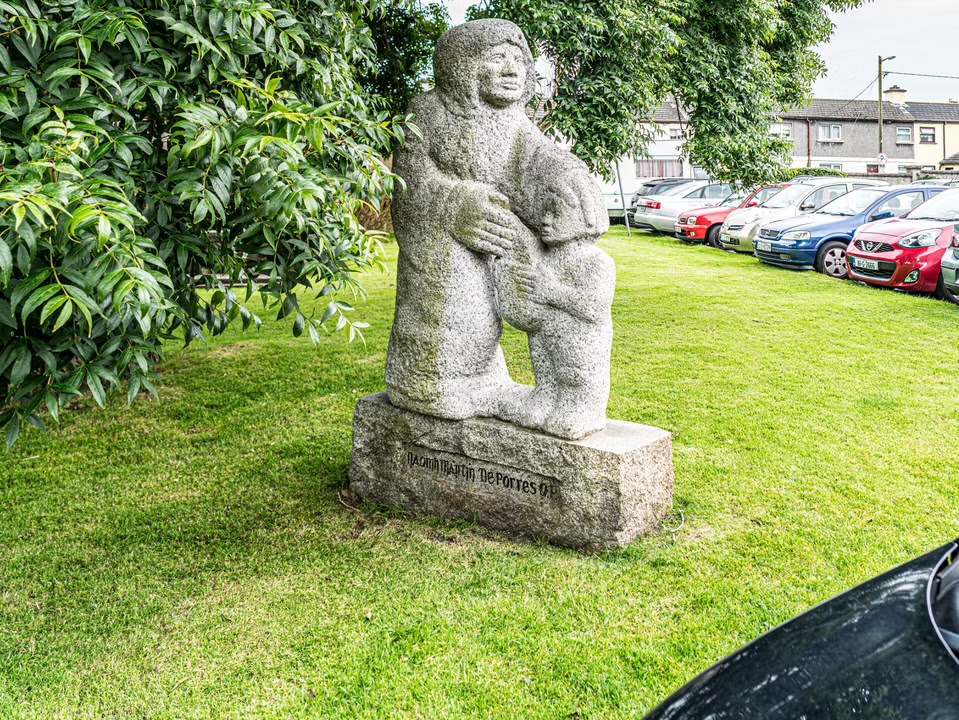
St Martin de Porres Sculpture by James McKenna
At first glance, one might easily mistake this evocative granite sculpture outside St Mary’s Dominican Church for a traditional "Mother and Child" study. In reality, it depicts St Martin de Porres (Naomh Máirtín de Porres) engaged in an act of tender mercy: ladling soup into a hungry child’s bowl while resting a gentle, reassuring hand upon the youngster’s head.
The piece was sculpted by the notable Irish sculptor and playwright James McKenna (1933–2000), a founding member of the Project Arts Centre in Dublin, renowned for his monumental, expressive stone carvings that celebrate human dignity, folklore, and quiet heroism. Though captured on camera in August 2015—despite a rather determined driver parking directly in front of the plinth—the raw, weathered texture of the granite still conveys McKenna’s distinct, earthy directness.
Born in Lima, Peru, Martin de Porres Velázquez, O.P. (9 December 1579 – 3 November 1639), was a lay brother of the Dominican Order (the Order of Preachers). The son of a Spanish nobleman and Ana Velázquez, a freed woman of African descent, Martin faced severe racial prejudice in colonial Peru before gaining admittance to the Dominicans, first as a tertiary and later as a professed lay brother. Beatified in 1837 by Pope Gregory XVI and canonised in 1962 by Pope John XXIII, he is the Americas’ first black saint. Today, he is venerated worldwide as the patron saint of mixed-race people, public health workers, barbers, innkeepers, animal welfare, and all striving for racial harmony.
Renowned for his austere lifestyle, perpetual fasting, and profound care for the marginalised, he established an orphanage, a children’s hospital, and shelters for stray animals. Popular devotion often credits him with the gifts of levitation, bilocation, miraculous healing, and an uncanny ability to communicate with animals.
The Architectural Setting: St Mary’s on the Claddagh
Commissioned for the Dominican friars who have ministered in the Claddagh area since 1488, the current church building was designed by the prominent Cavan-born architect William Hague and dedicated in 1891. Built of local rock-faced granite, the exterior exemplifies the Hiberno-Romanesque revival of the late Victorian era, featuring round-headed arches, an intricately carved entrance tympanum, and moulded stone surrounds. Inside, the church houses a sumptuously ornamented high altar, font, and reredos, serving as a striking architectural backdrop to McKenna’s quiet granite tribute on the quay.