THE CAMERA PERFORMED VERY WELL IN LOW LIGHT
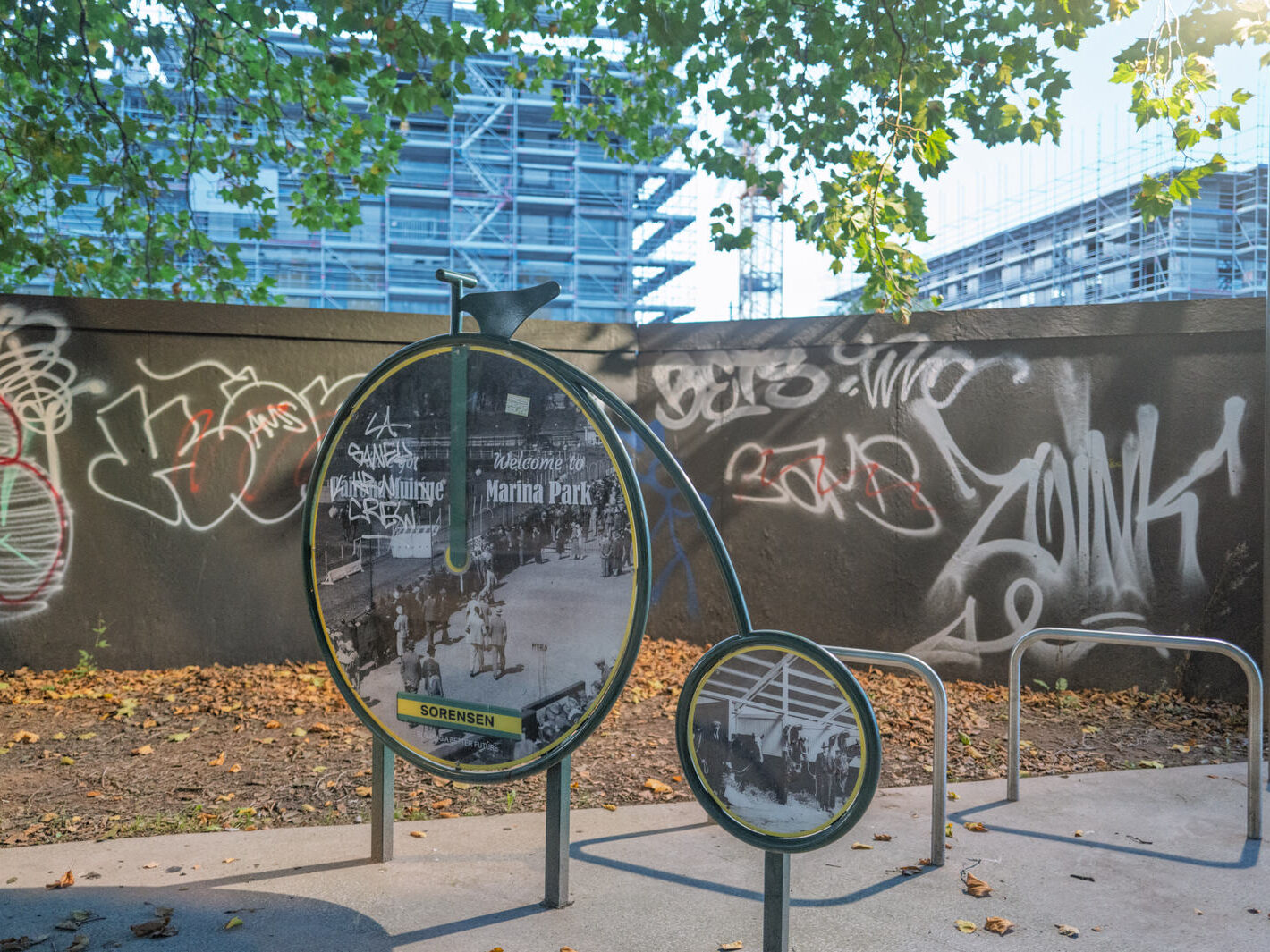
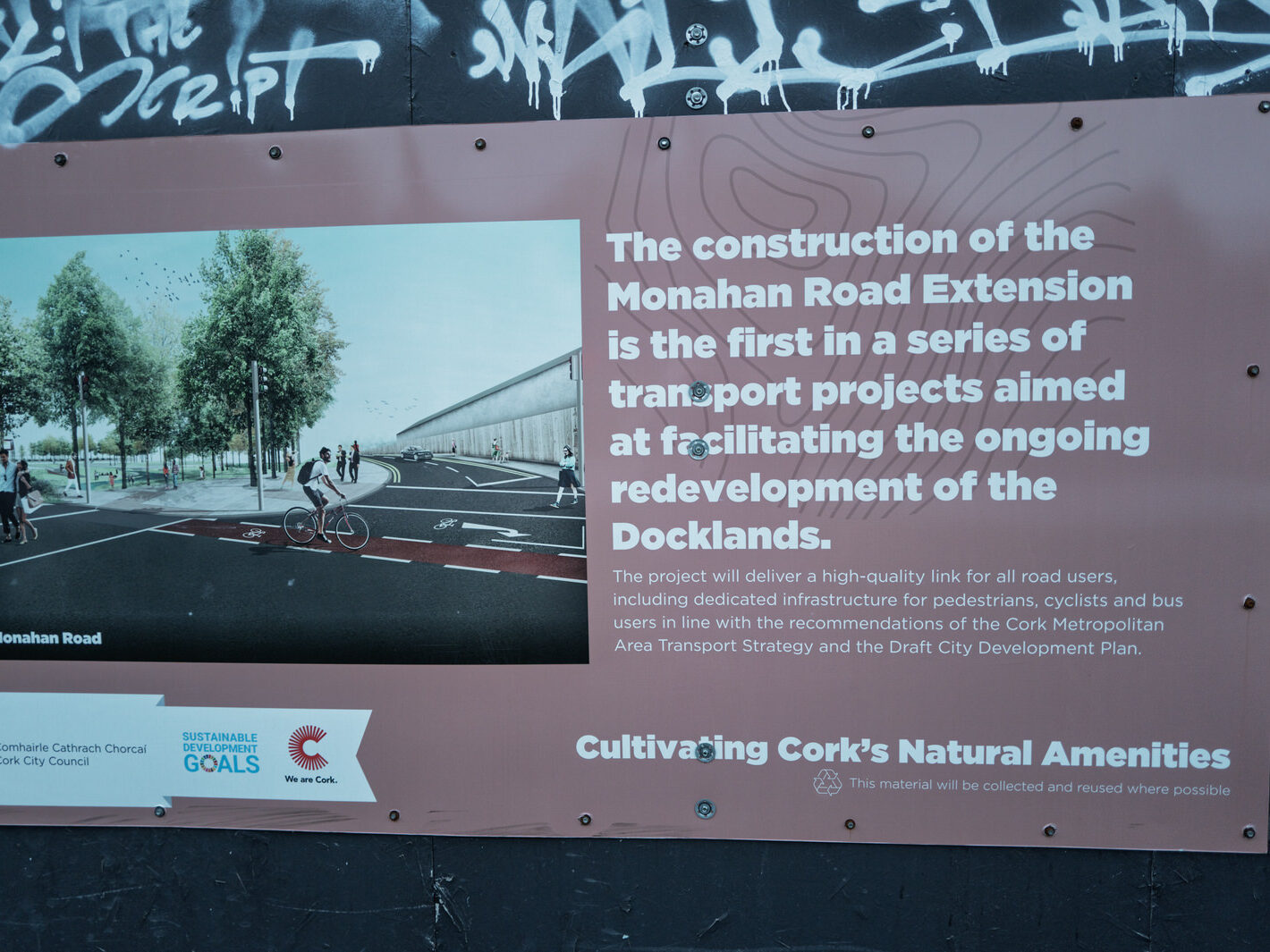
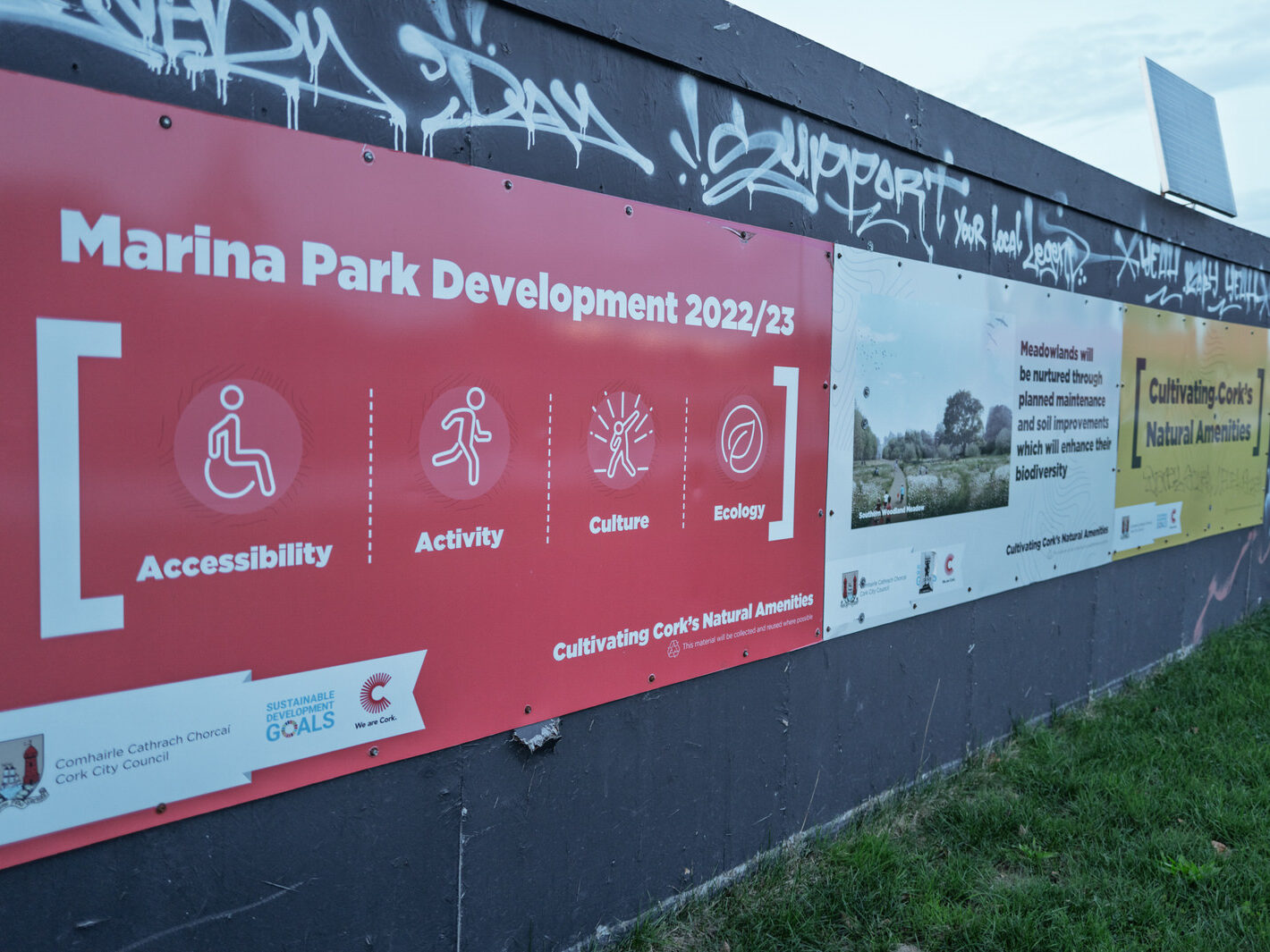
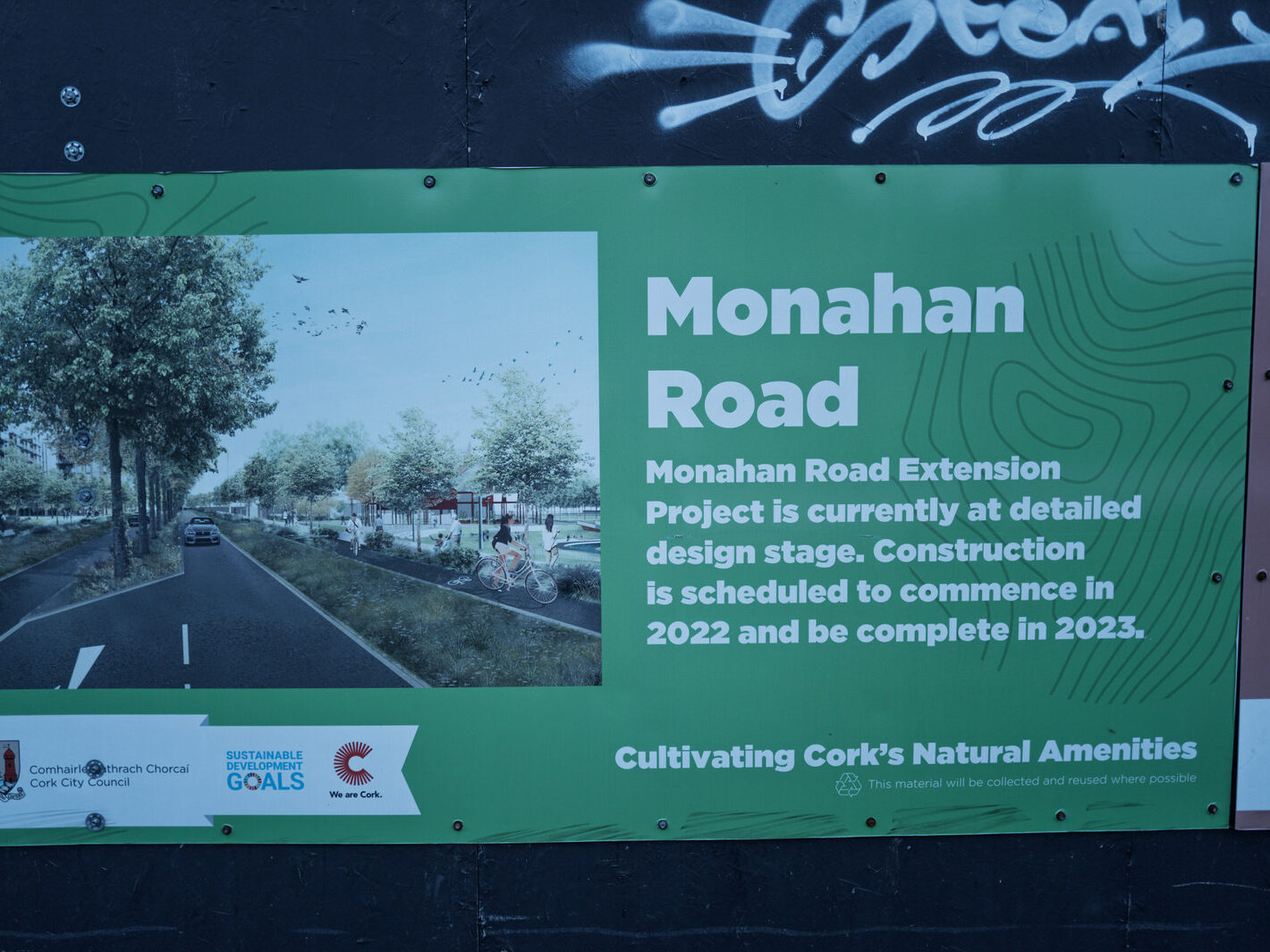
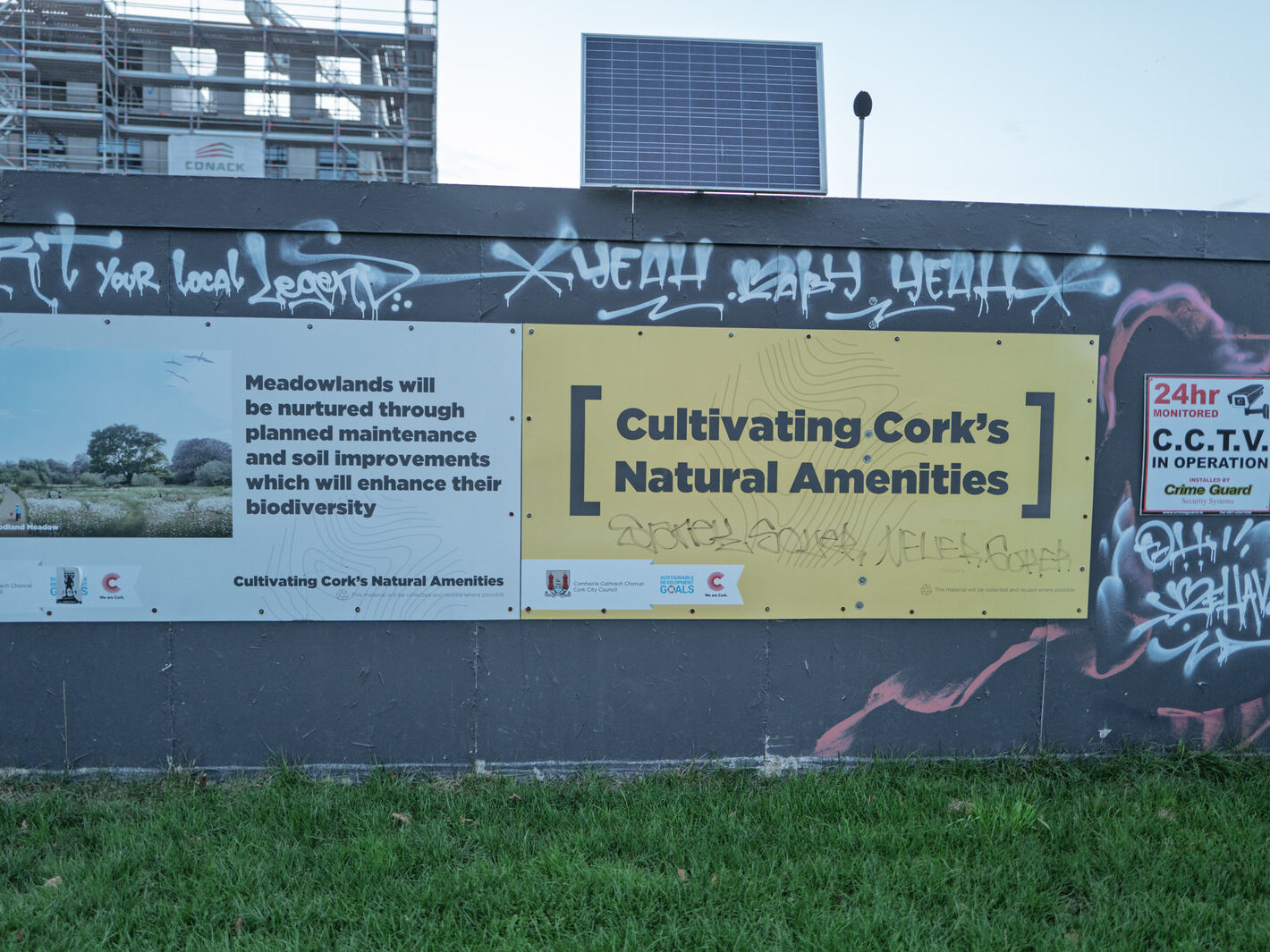
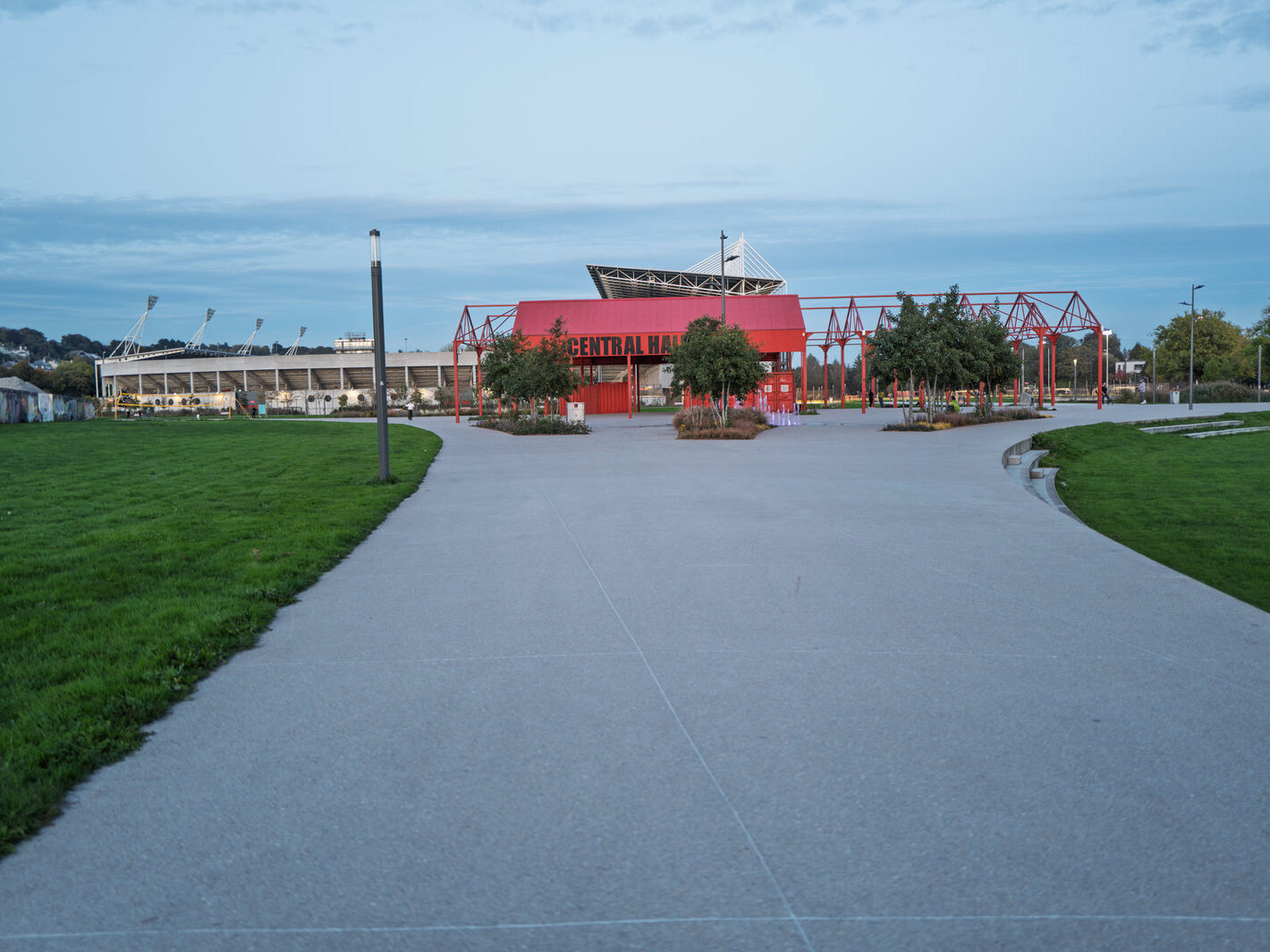
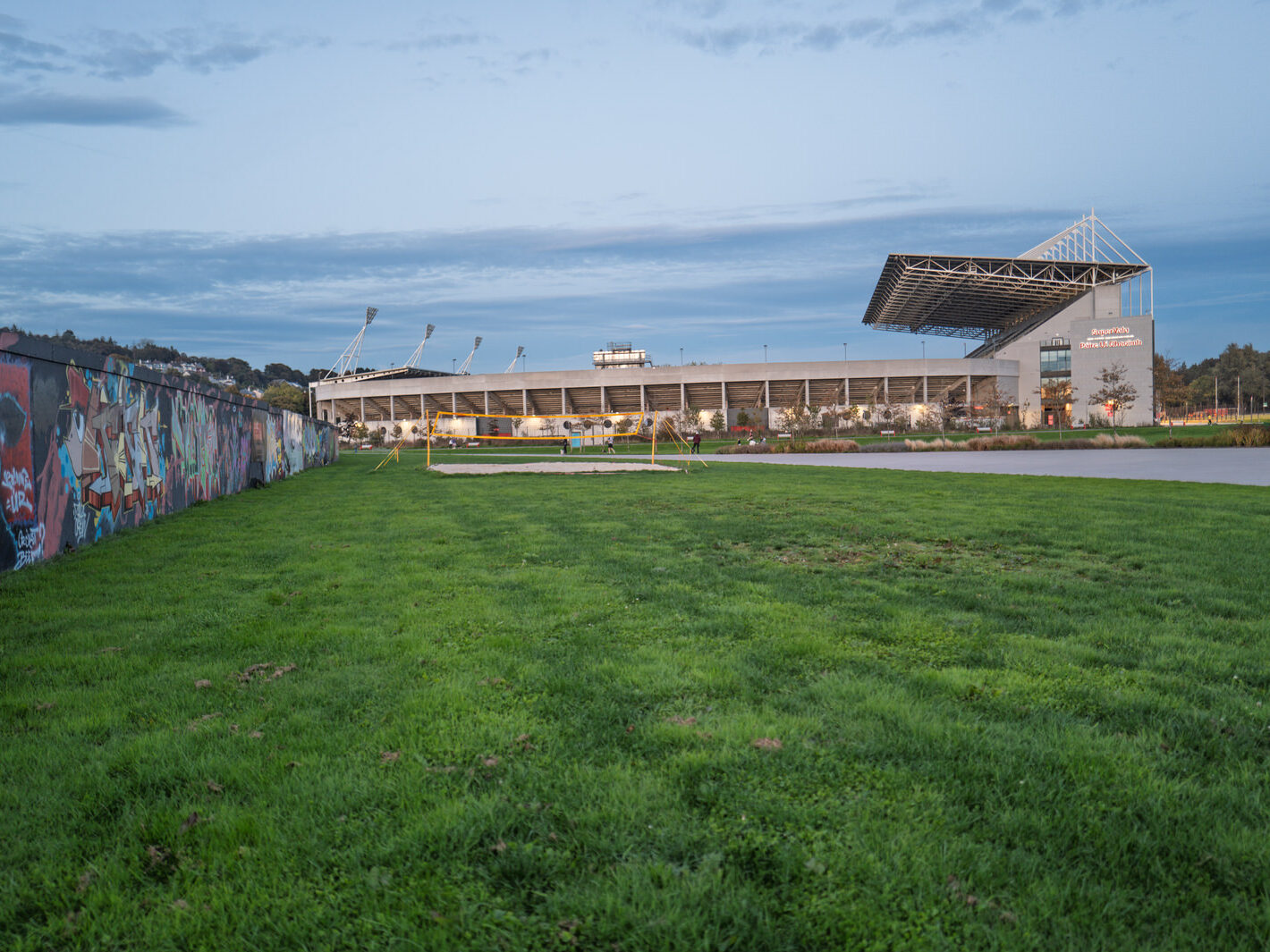
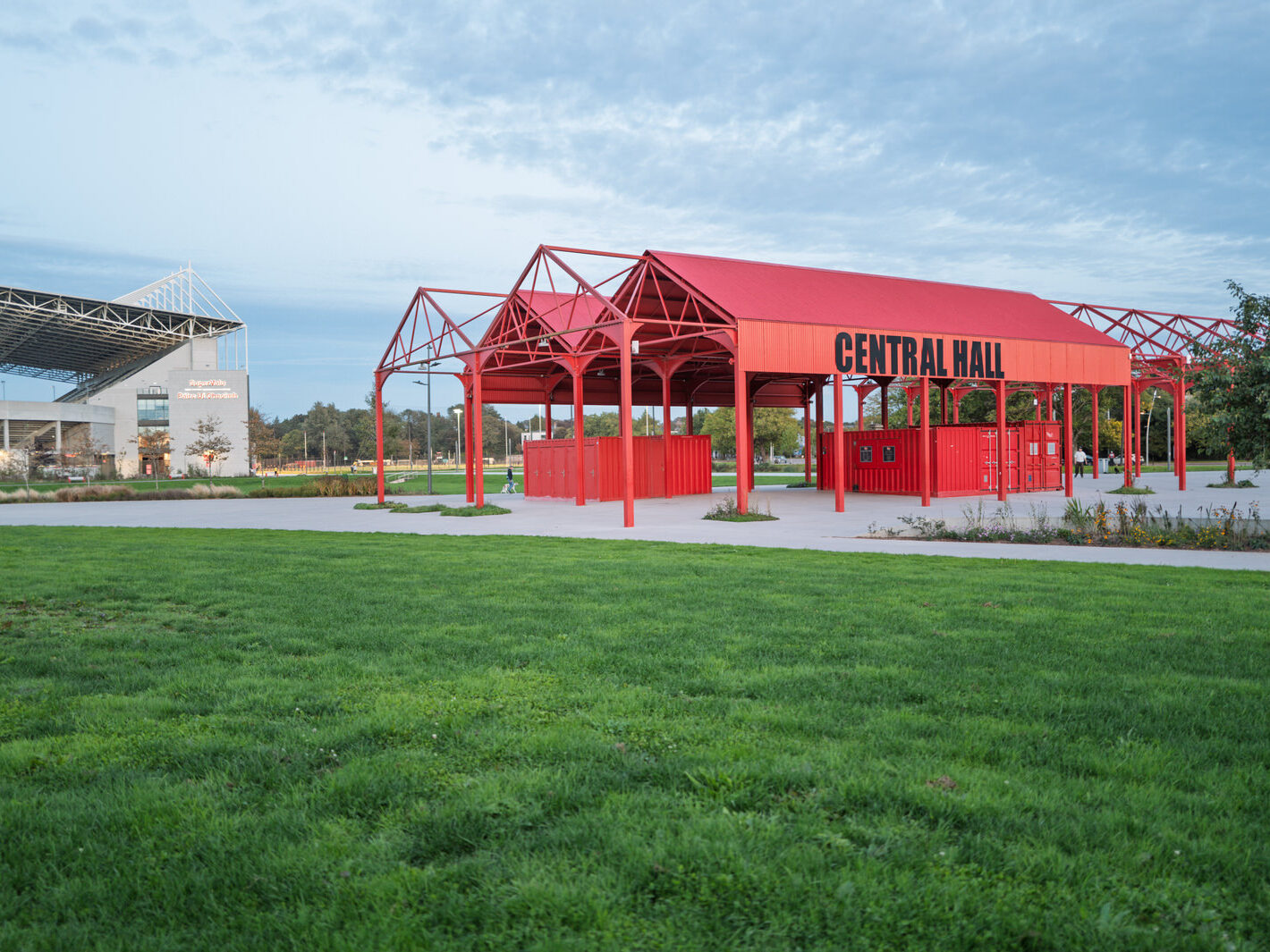
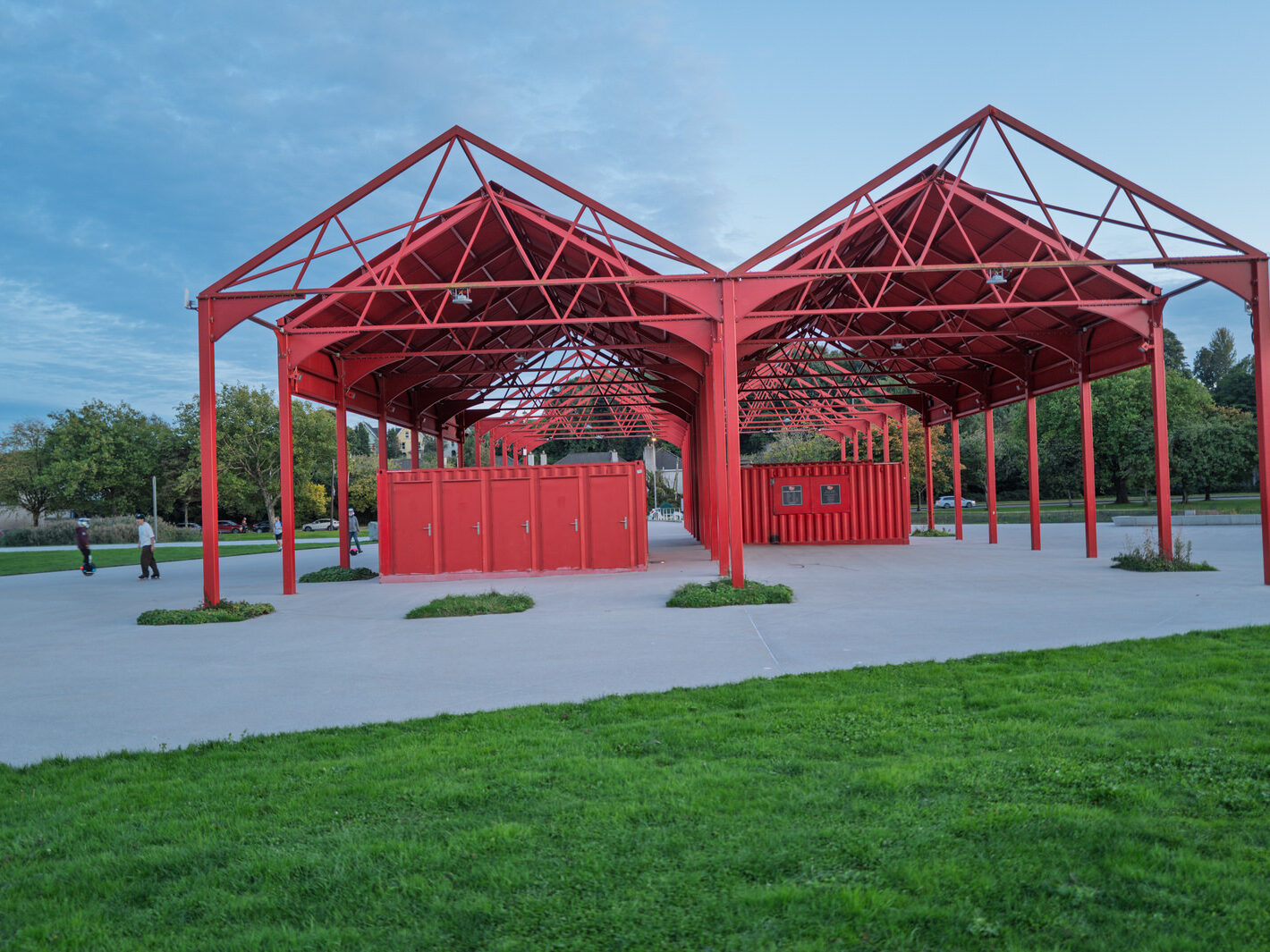
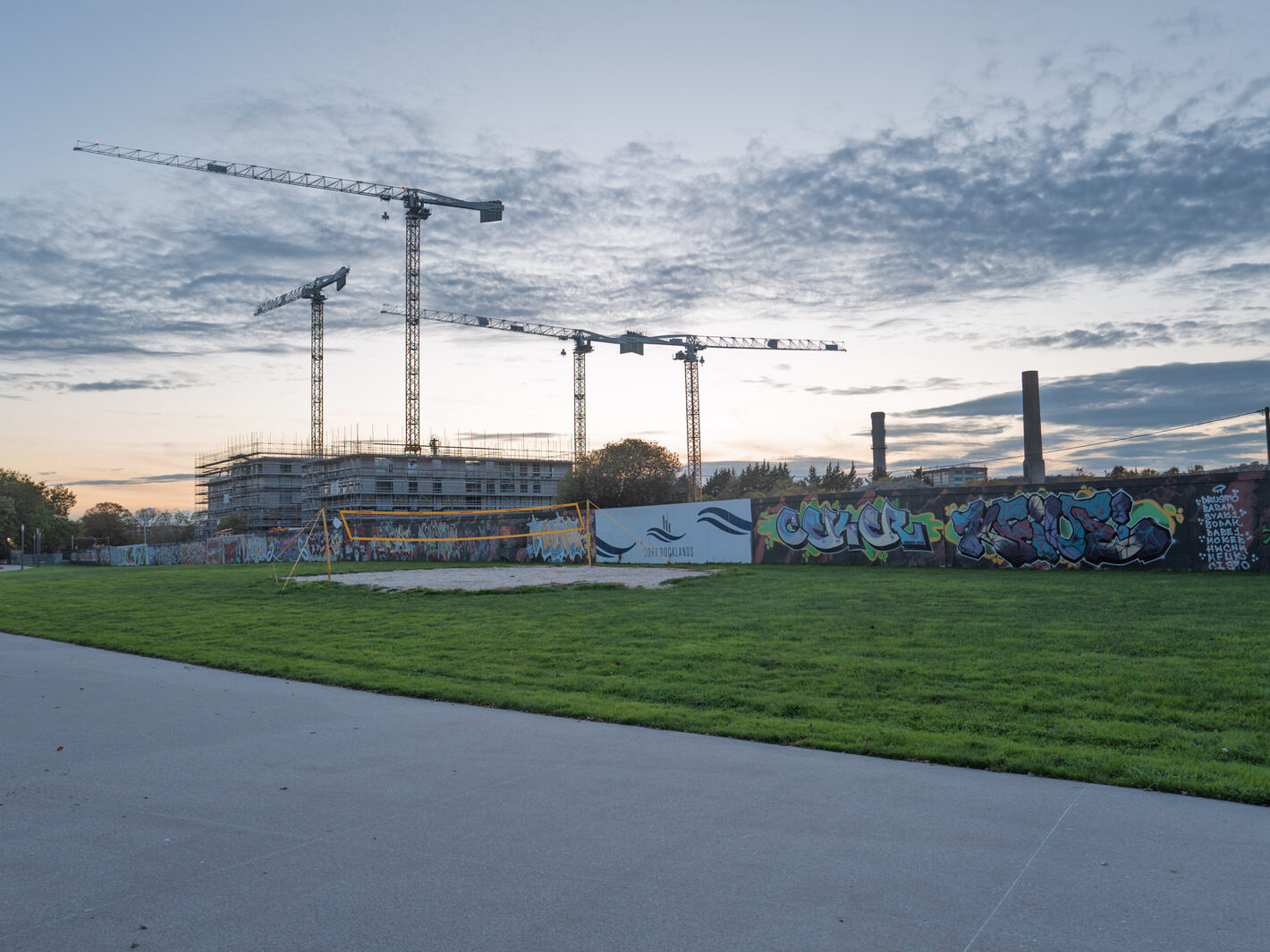
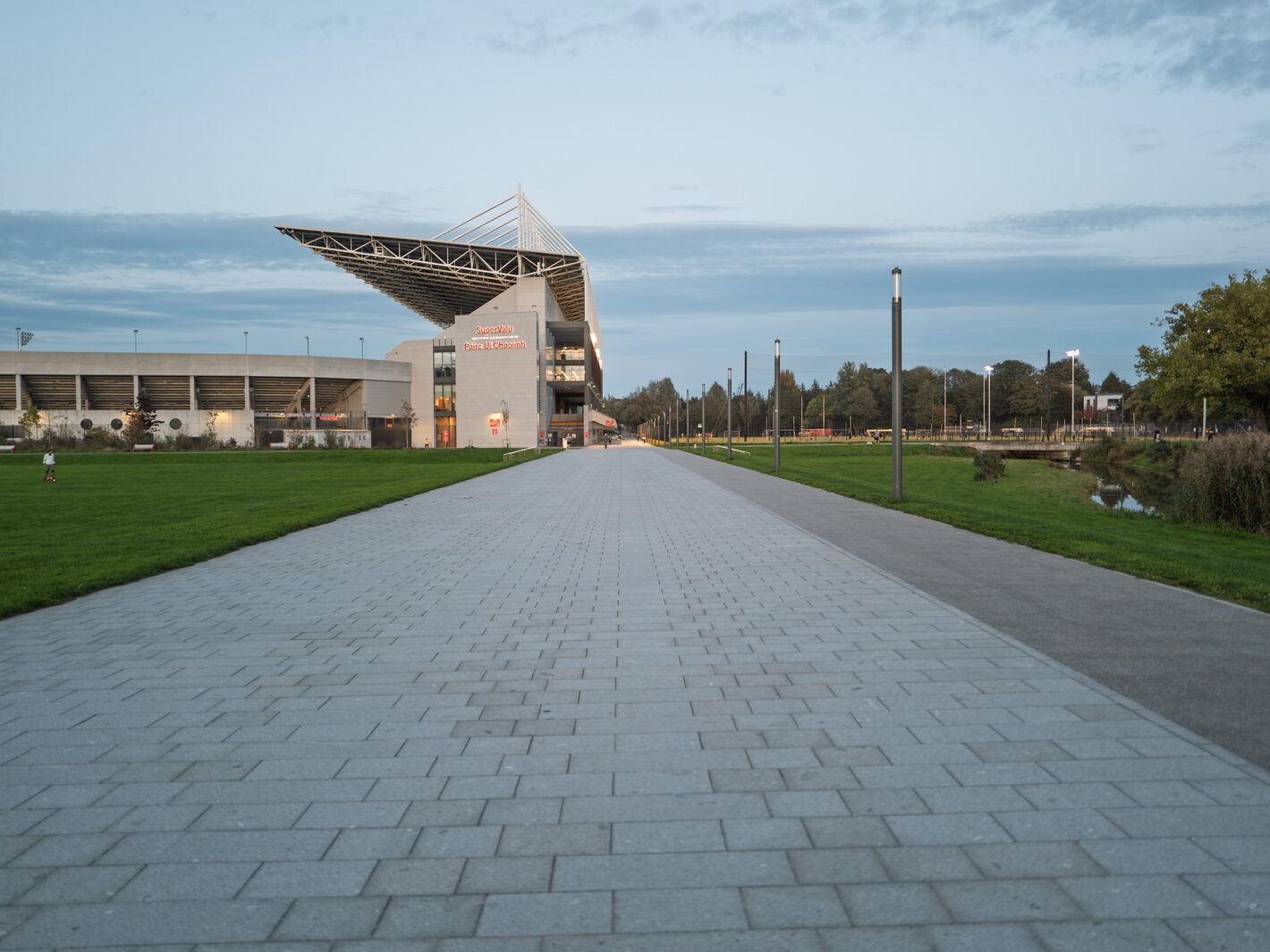
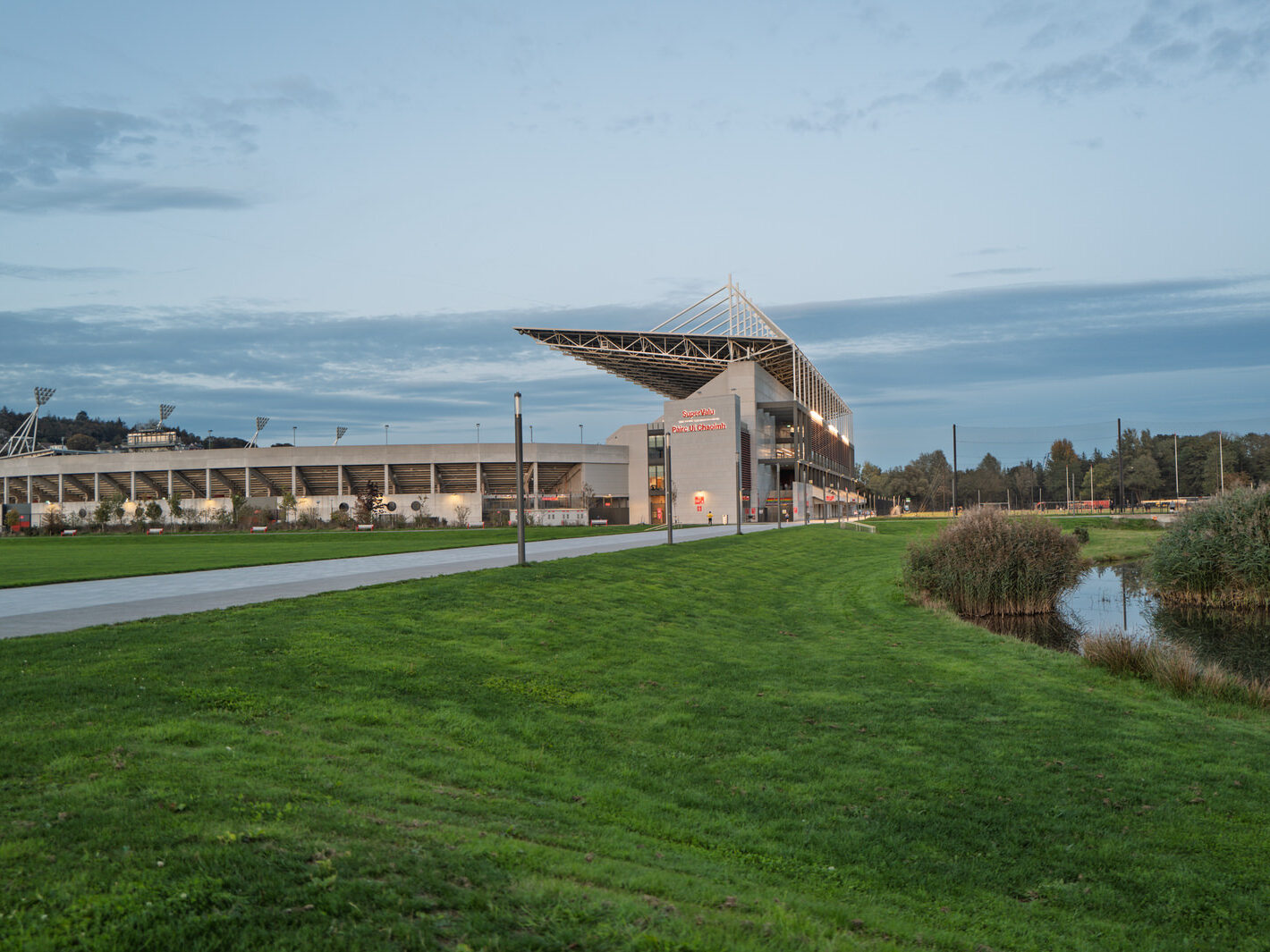
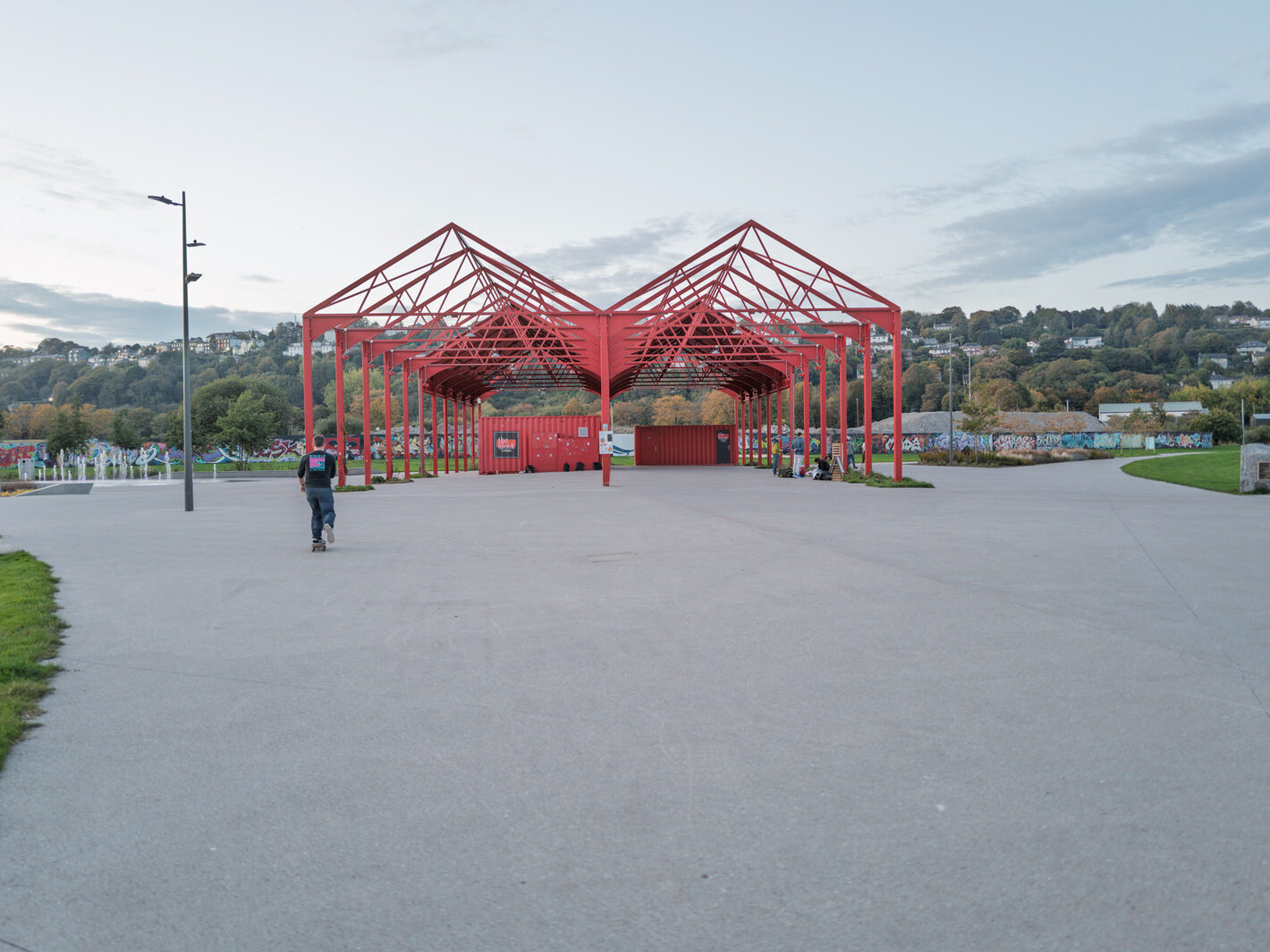
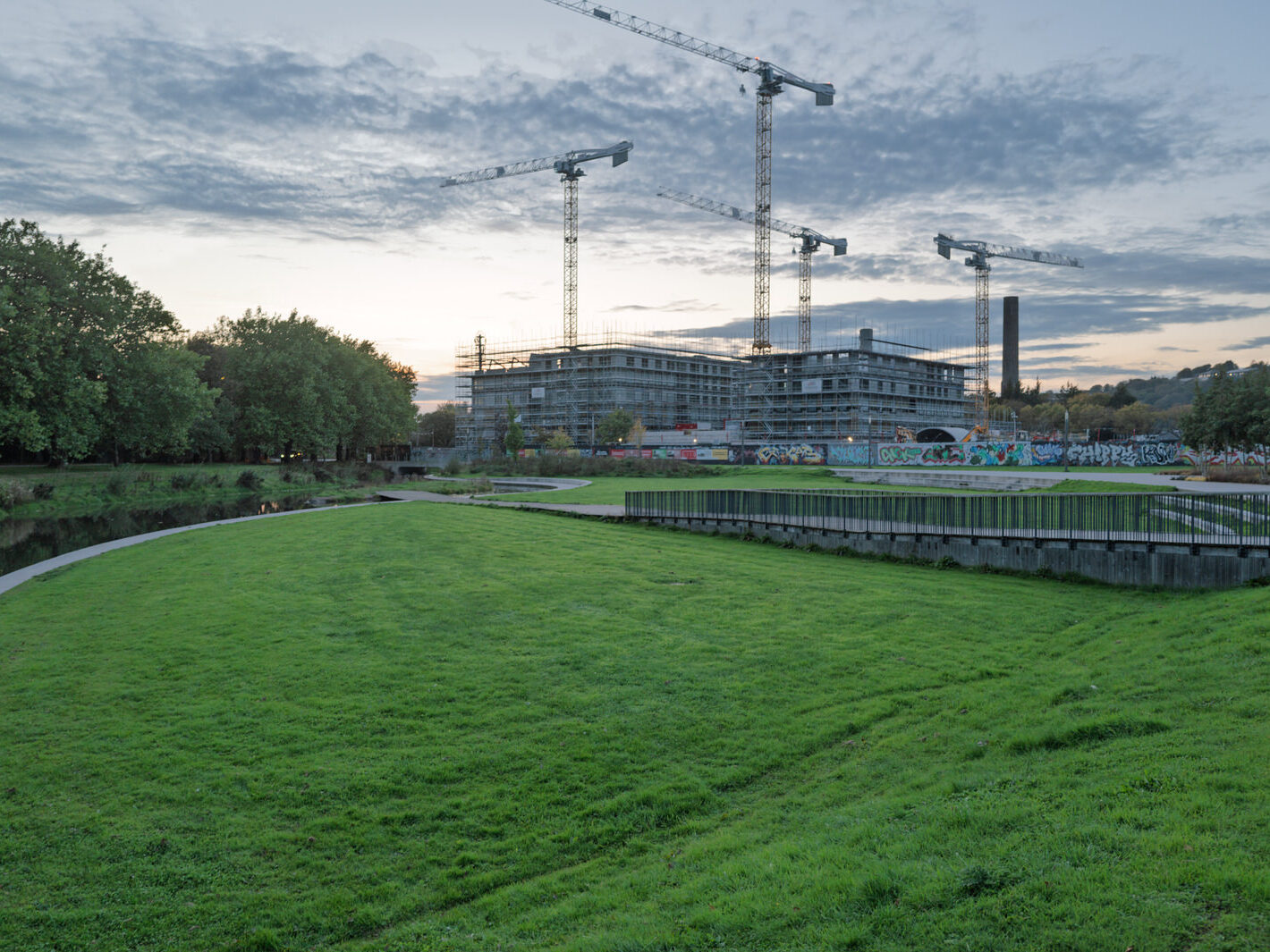
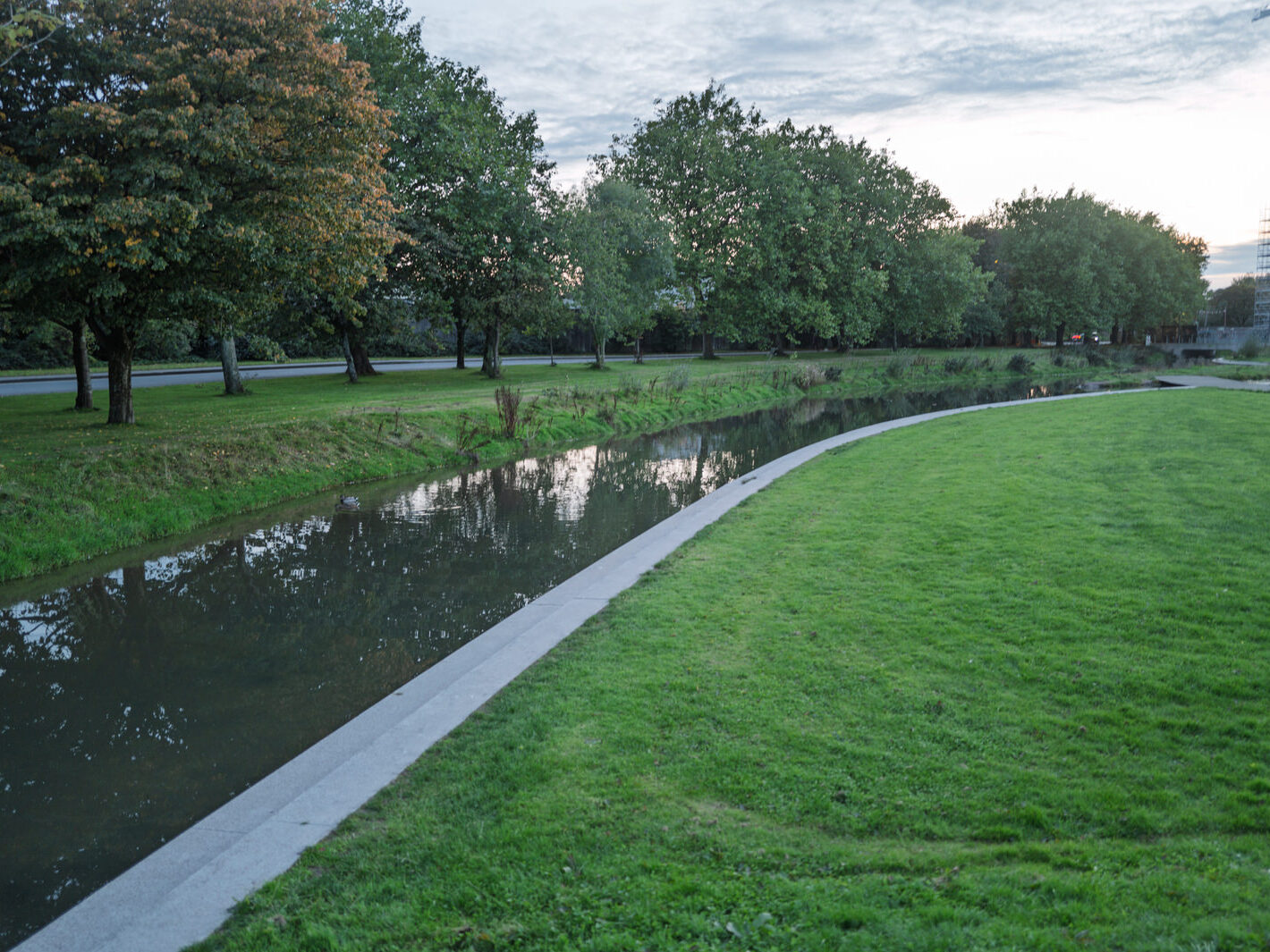
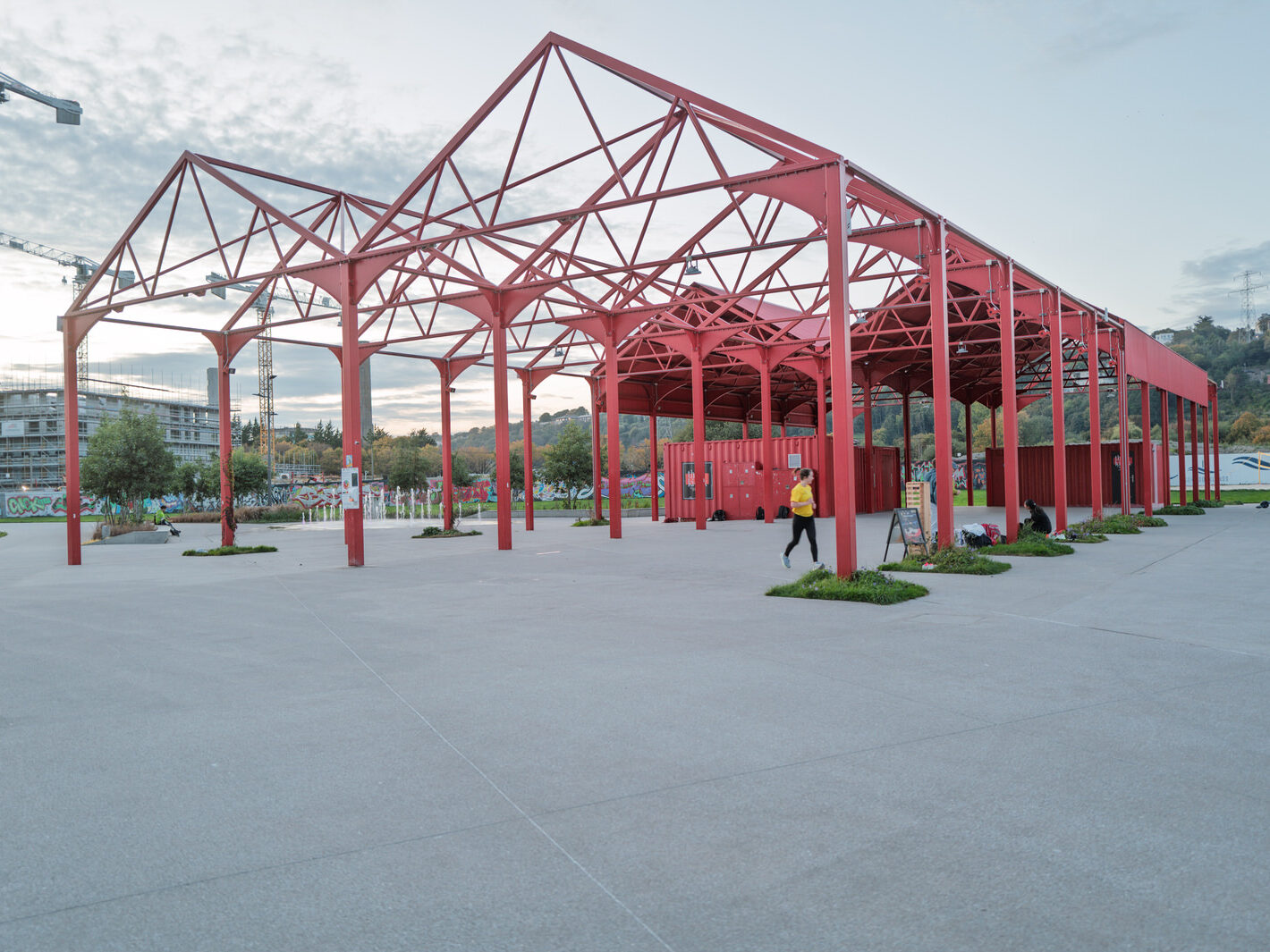
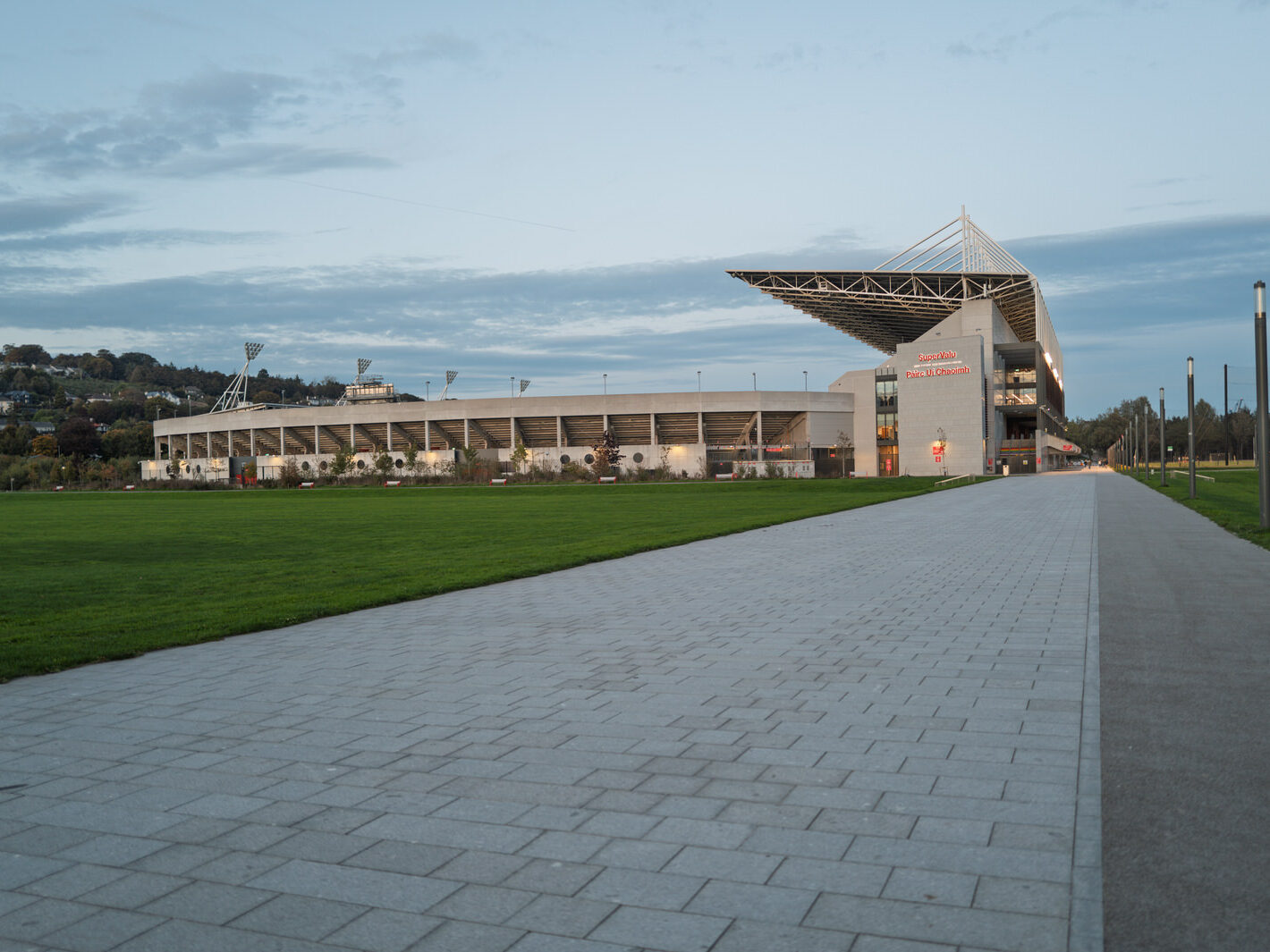
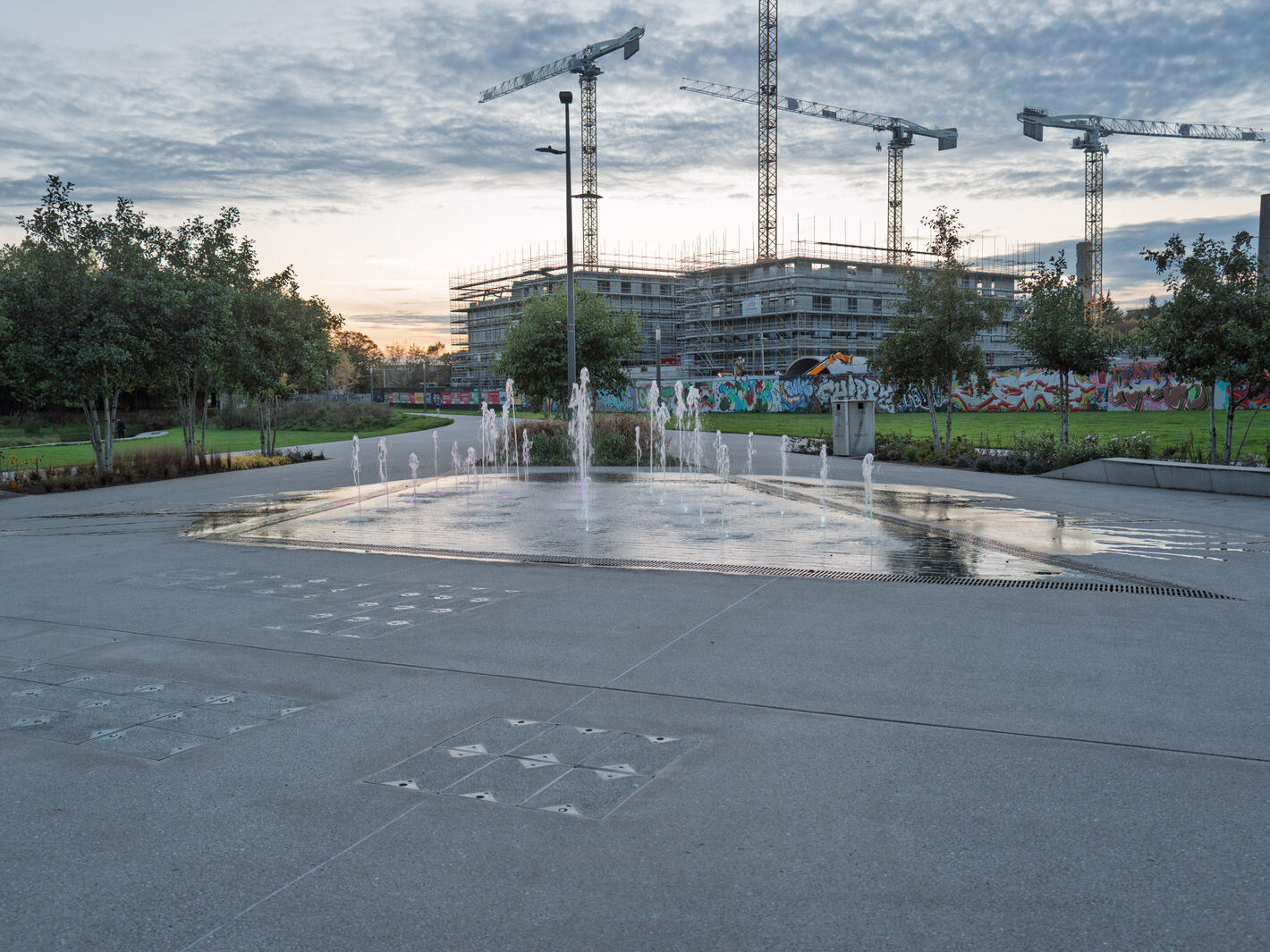
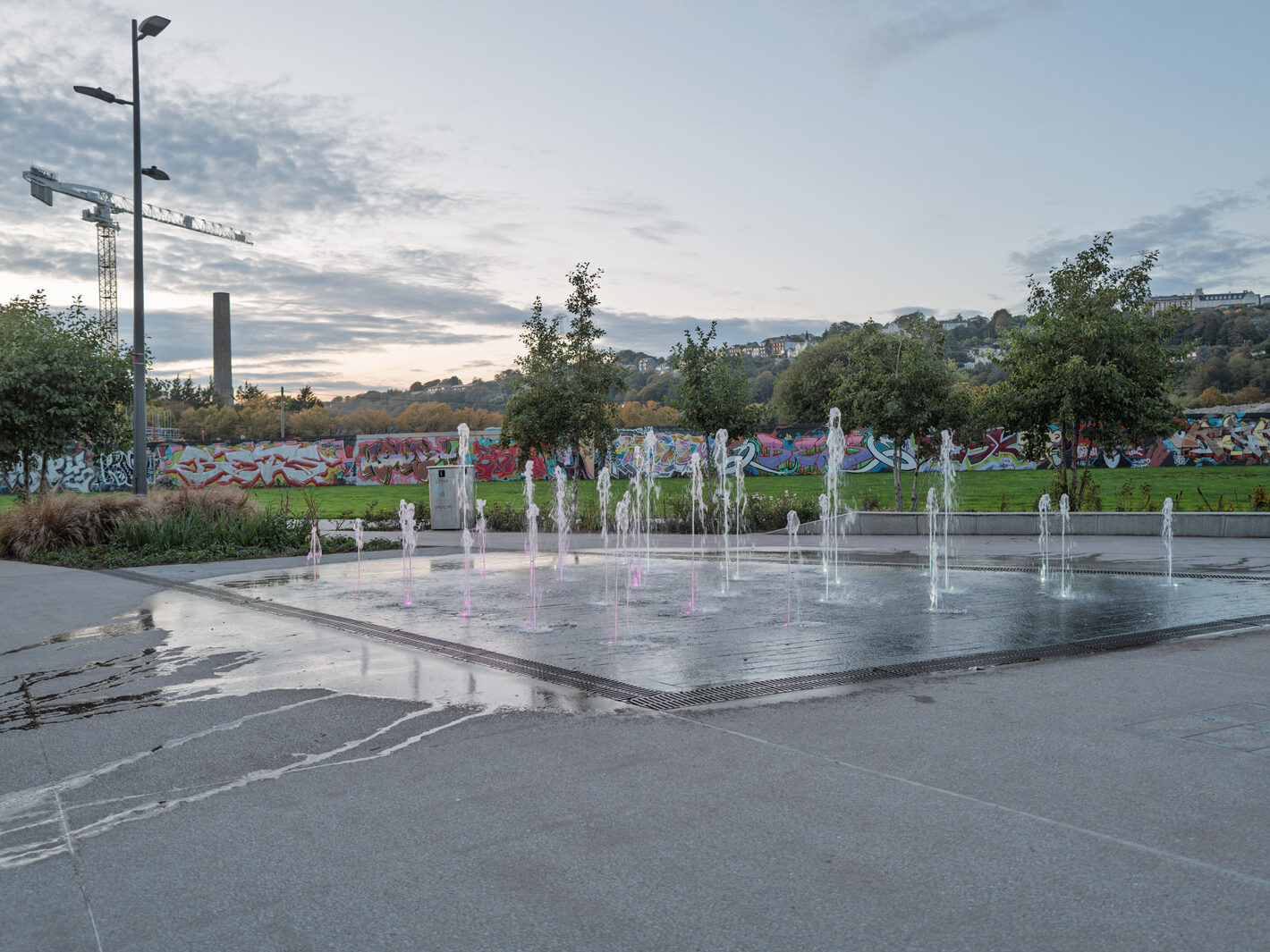
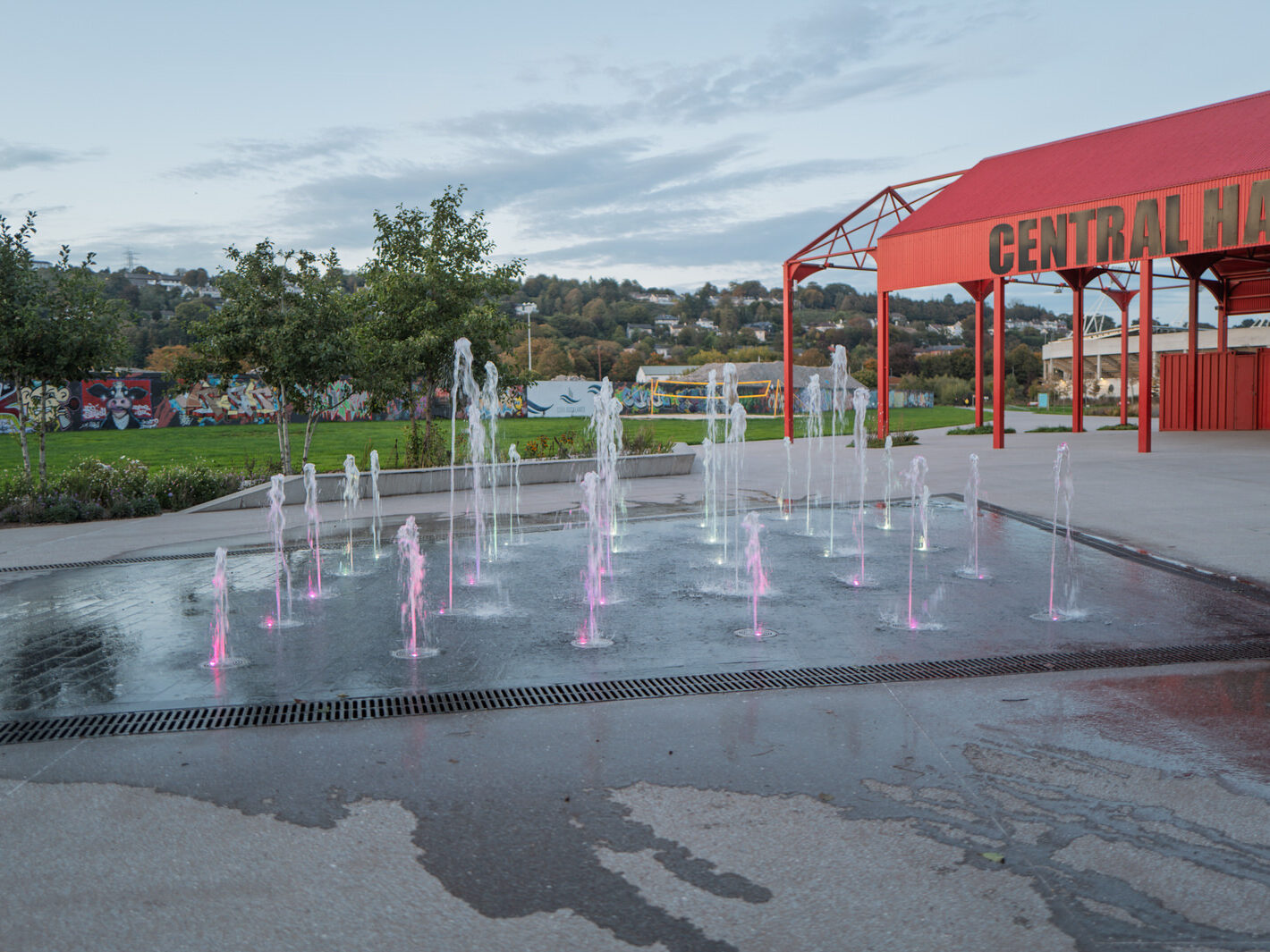
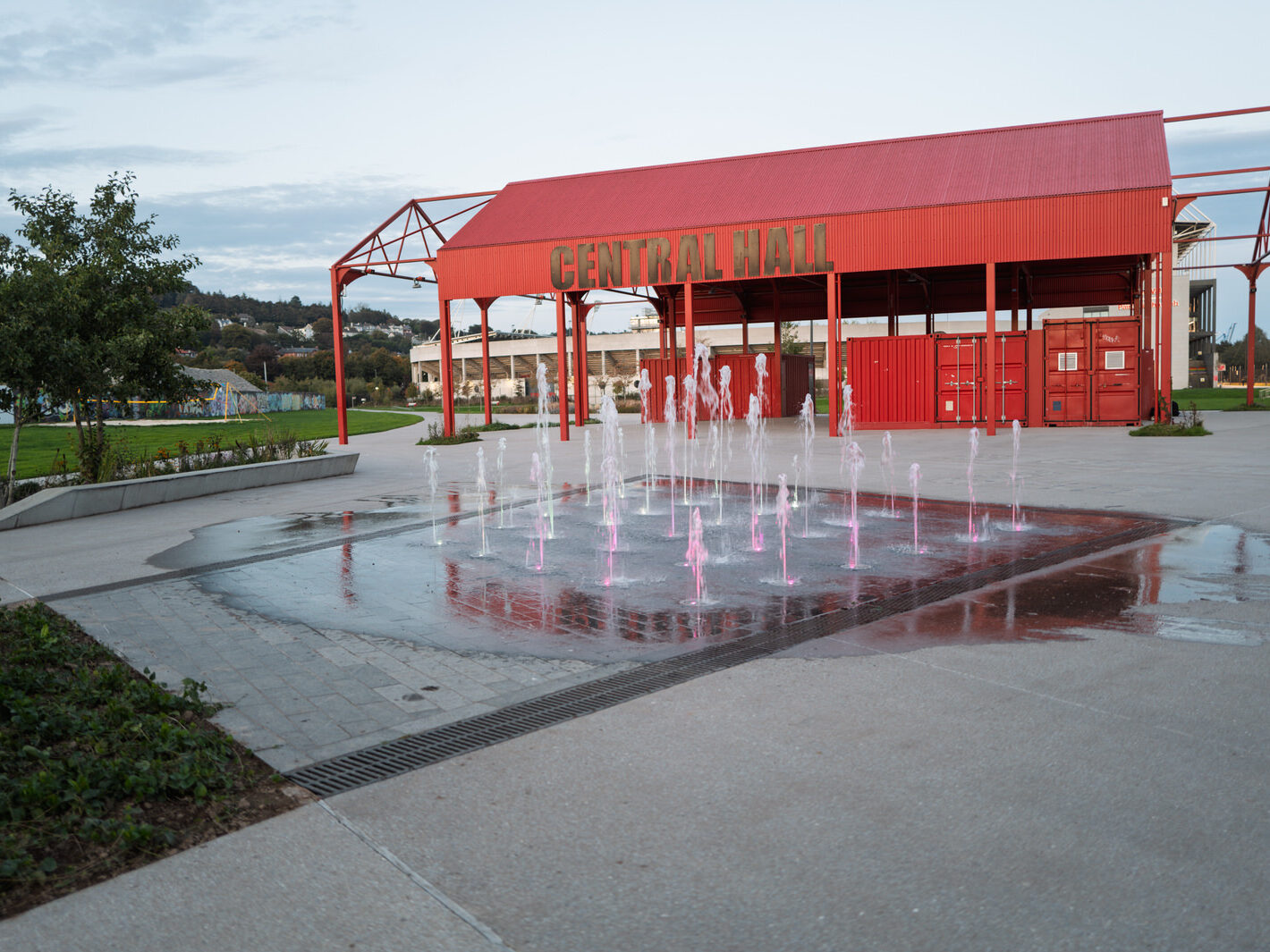
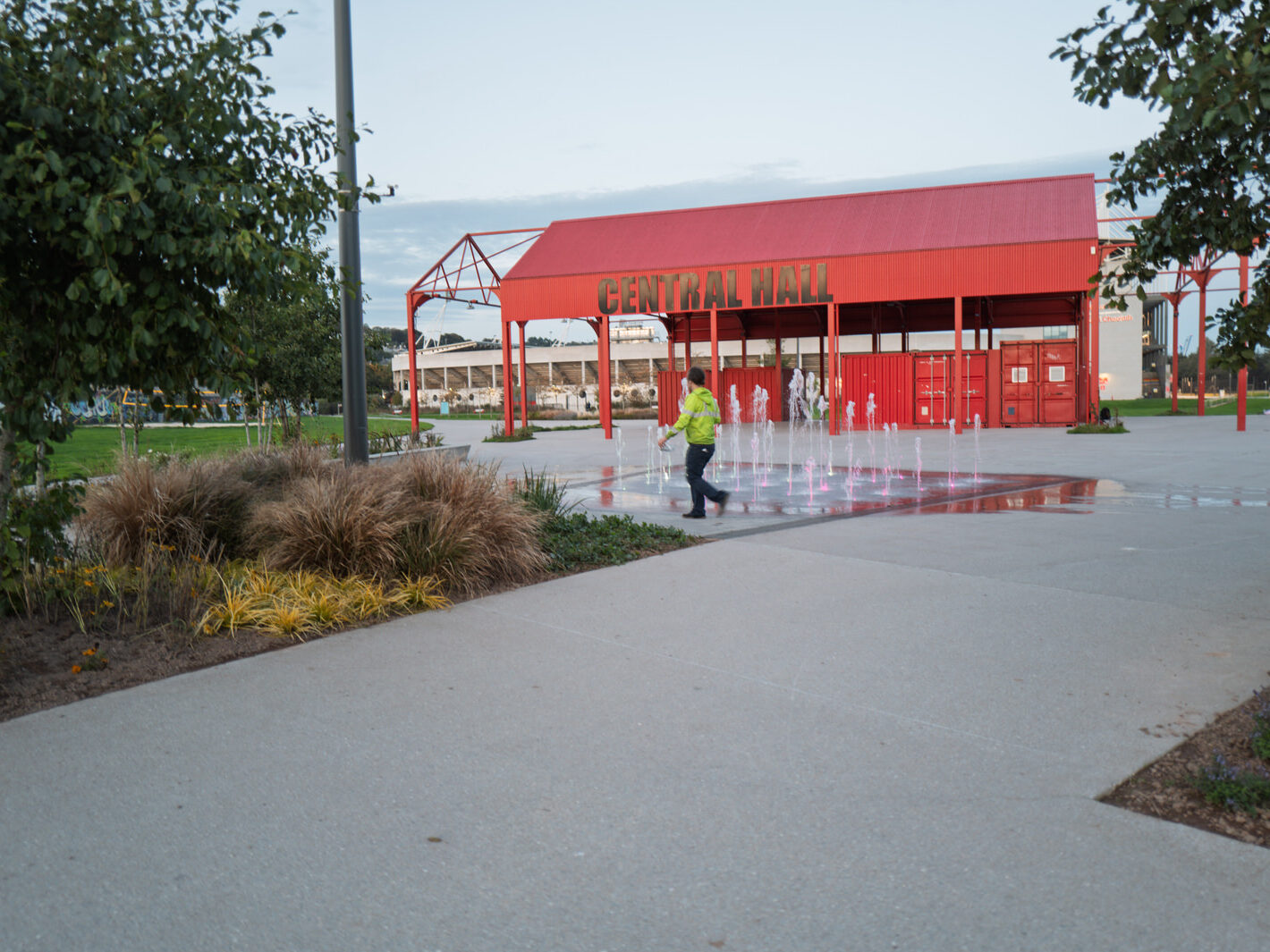
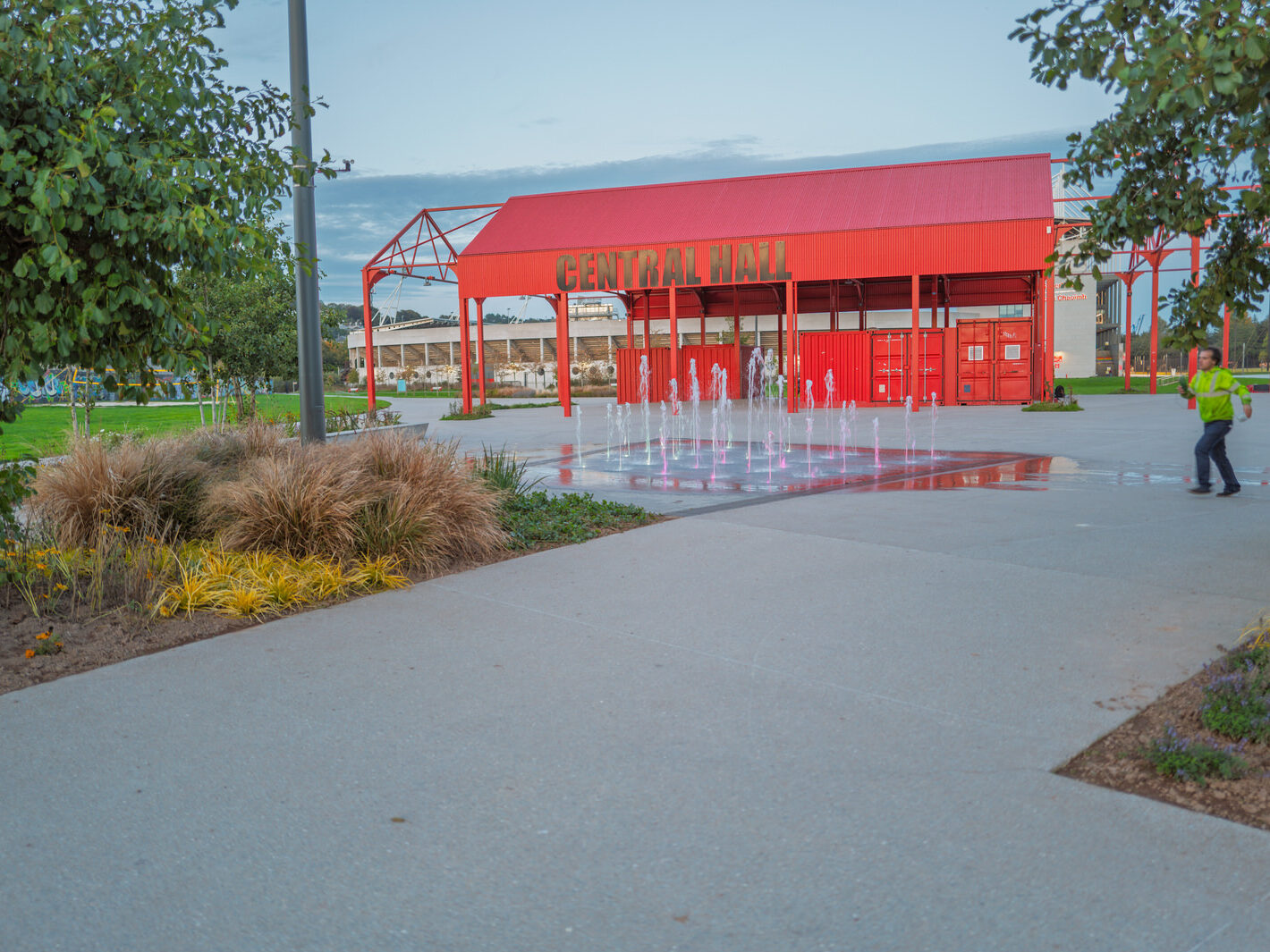
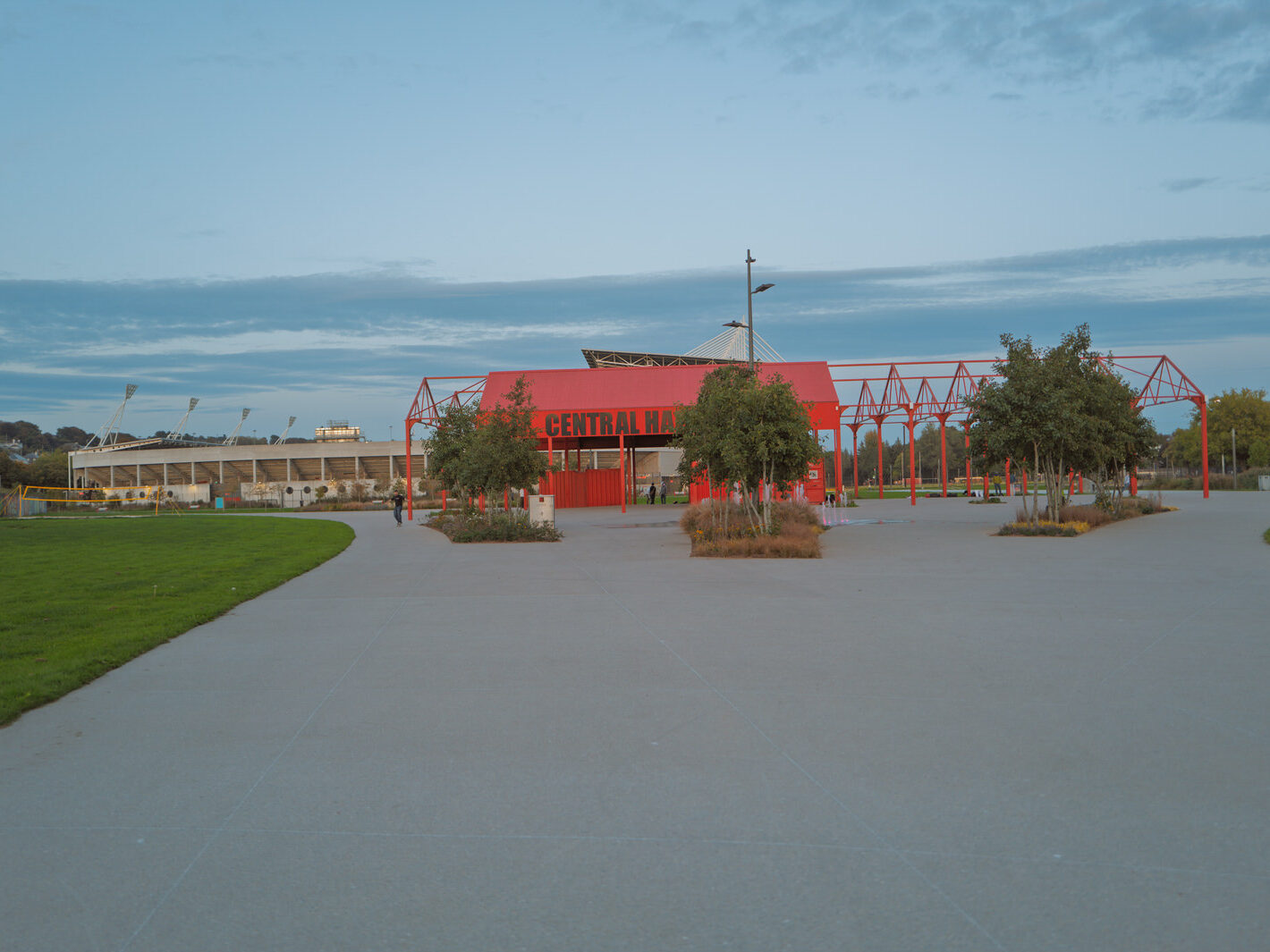
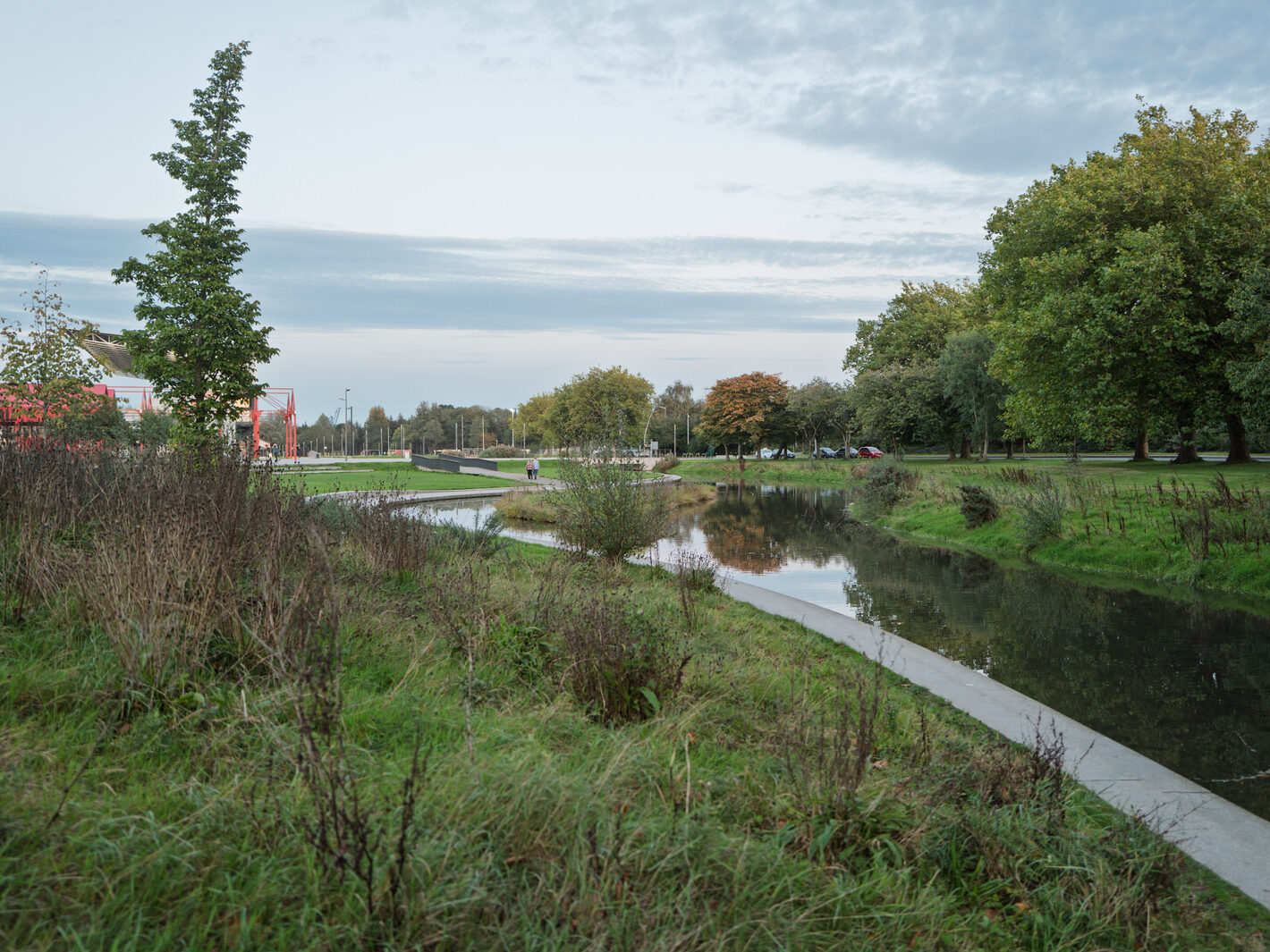
THE MARINA PUBLIC PARK AFTER SUNSET [I USED A LEICA Q3]
The Marina and the Metropolis: An Analysis of Urban Transformation in Cork’s South Docklands
A Park in Transition: The New Green Heart of the Cork Docklands
The Marina Park in Cork is not merely a new public amenity; it stands as the vibrant, green centrepiece of the Cork Docklands regeneration, arguably one of the most ambitious and transformative urban renewal projects in modern Irish history. Observations of transient street art adorning construction hoardings, novel forms of youth recreation along pristine pathways, and the relentless vertical climb of residential towers are not disparate events. They are the visible, dynamic symptoms of a district in profound flux, caught between a storied industrial past, an energetic present, and a high-density future. This report will analyse these interconnected phenomena, positioning Marina Park as the pivotal nexus where the forces of history, culture, planning, and commerce converge to shape a new identity for the city.
The strategic context for this metamorphosis is vast. It is fundamentally enabled by the Port of Cork Company’s historic “River to Sea Port” journey, a long-term plan to relocate primary shipping and container operations from the traditional City and Tivoli Docks downstream to more modern, deep-water facilities in the lower harbour, such as Ringaskiddy. This strategic withdrawal from the city’s historic core is the catalyst that has unlocked extensive brownfield sites, former industrial lands ripe for redevelopment. This physical opportunity is underpinned by powerful policy drivers. The National Development Plan and Project Ireland 2040 designate Cork as an emerging city of international scale, projecting its population to increase by as much as 50% over the next two decades. The Cork City Development Plan 2022-2028 provides the local statutory framework to manage this growth, envisioning the creation of sustainable, people-centred city neighbourhoods in the docklands that will provide homes for over 20,000 people and more than 25,000 jobs. Within this grand vision, Marina Park is explicitly designed to be the main public open space, serving as a key economic driver and a catalyst for the regeneration of the entire area.
A deeper analysis reveals that the park’s role is more complex than simply being a green space for future residents. The development of Marina Park is not merely a consequence of the docklands regeneration but is also a crucial catalyst for it. The regeneration of a former industrial zone is a multi-decade undertaking requiring immense capital investment from both public and private sectors. To overcome the perception of docklands as potentially derelict or undesirable, a strong “sense of place” must be proactively established. Cork City Council, with significant co-funding from the European Regional Development Fund and the Department of Housing, made a deliberate, early-stage investment in Phase One of the park, which officially opened in May 2022. By creating this high-quality public realm first, the city signals its commitment to quality of life and effectively de-risks the area for subsequent private investment. The tangible existence of the park provides a high-value amenity that major developers, such as Glenveagh Properties with its 1,000-unit Marina Quarter scheme, can leverage as a primary selling point. Therefore, the park’s construction is a strategic act of placemaking. It precedes the full residential build-out, serving as both an anchor and a promise of the quality of life to come, thereby stimulating the very development it is also designed to serve.
The Evolving Canvas: Street Art, Hoardings, and Urban Identity
The presence of street art on construction hoardings around Marina Park is a direct and deliberate feature of large-scale urban redevelopment. This practice serves a dual purpose. Functionally, it is a visual mitigation strategy, transforming unsightly but necessary barriers into temporary public canvases that shield the public from the disruption of construction. Culturally, it provides a platform for ephemeral art that can engage the community, reflect the creative energy of the city, and animate the streetscape during a period of transition. This art is, by its very nature, transient; its existence is tied to the construction timeline, and it is destined to disappear as the developments it conceals are completed.
Ardú: Cork’s Permanent Open-Air Gallery
In stark contrast to the temporary nature of hoarding art stands Ardú, Cork’s acclaimed permanent street art initiative. Launched in October 2020, during a period of public lockdown, Ardú’s mission was to inject colour, vibrancy, and life into the city’s public spaces, uniting the Leeside community through accessible art. The name itself, the Irish word for ‘Rise’, was chosen to evoke a theme of nostalgia and celebration, referencing Cork’s resilience in rising from the ashes of the Burning of Cork in 1920 and its capacity to rise again from contemporary challenges.
Supported by Cork City Council and Creative Ireland, the project commissions large-scale murals from some of Ireland’s most respected street artists, including Maser, Asbestos, Friz, and the Cork-born Conor Harrington. These works are not temporary installations but significant and permanent additions to the city’s cultural landscape. They transform prominent gable ends and blank walls at key locations—such as Harley Street, South Main Street, Anglesea Street, and Wandesford Quay—into an expansive open-air gallery, creating new landmarks and spurring public conversation.
A Spectrum of Street Art
The artistic expression in and around the Marina area exists across a full spectrum, from the officially sanctioned to the grassroots. At one end is the formal, city-led commission for a mural on the historical pavilion located on the newly designed Marina Promenade. This commission comes with a specific thematic brief, inviting artists to submit proposals that celebrate the rich local heritage, the area’s ecology and biodiversity, and river life. At the other end of the spectrum are the “Graffiti Battles” held at the nearby Marina Market. These events represent a more counter-cultural and competitive facet of the scene, where local artists create large-scale pieces under a tight time limit of just 30 minutes, with the ultimate winner receiving a paid commission to paint the market’s main entrance. This highlights a vibrant, living graffiti culture that thrives alongside the more curated, permanent murals of the Ardú project.
The different forms of street art visible in the Marina Park area are not isolated phenomena but represent a multi-layered cultural dialogue with the process of urban transformation itself. Each form occupies a different niche and speaks with a different voice. The art on the construction hoardings is a direct reaction to the physical disruption of development; it is a temporary mask that makes the process of change more palatable. The Ardú project is a proactive, strategic intervention, a conscious effort to forge a new, permanent cultural identity for the city by creating lasting landmarks that often reference its history of resilience. The Marina Pavilion commission is a heritage-focused act of placemaking, designed to embed the specific story of that location into the new public realm. Finally, the Marina Market battles are a celebration of the raw, creative energy of graffiti culture itself, providing a public stage for skill, performance, and community. Together, this ecosystem of art provides a rich, multi-vocal commentary on Cork’s evolution: the hoardings reflect the
process of change, Ardú reflects the new identity being forged, the pavilion mural will reflect the deep history, and the graffiti battles reflect the ongoing, vibrant subculture.
New Wheels on the Promenade: Youth Culture in a Regenerated Space
The “one wheel devices” observed in Marina Park are a brand of self-balancing, single-wheeled electric skateboards known as Onewheels. Invented by electromechanical engineer and board sports enthusiast Kyle Doerksen, the device is designed to replicate the fluid feeling of surfing or snowboarding on paved surfaces. A large, central wheel is straddled by two footpads, and the rider controls speed and direction by leaning, with the internal motor and sensors maintaining balance. These devices are capable of reaching speeds of 12 miles per hour (around 20 km/h) or more, depending on the model.
The presence of both traditional skateboarders and Onewheel riders in Marina Park is indicative of a broader culture of personal electric vehicles (PEVs) and board sports that thrives in high-quality, modern urban environments. While skateparks have traditionally been the designated home for such activities, the design of contemporary public spaces is increasingly accommodating them within the wider public realm. The newly developed Marina Park and the adjoining Marina Promenade, with their extensive, smooth, and wide pathways, provide an ideal terrain for these new forms of recreation.
The congregation of these users is not accidental but is a direct consequence of specific urban design choices. The investment in high-quality public realm infrastructure has actively shaped the cultural and recreational life of the area. The Marina Promenade scheme, stretching 1.8km from Centre Park Road to Blackrock Village, was explicitly designed to provide significantly improved infrastructure for cyclists and pedestrians, making a large portion of it car-free and creating a high-quality shared surface. This has, in effect, created a new, informal “linear skatepark” and recreational corridor that attracts user groups that might have previously been confined to designated facilities like the Mardyke skatepark. The park, therefore, becomes more than just a place for a walk; it is a social stage for skill, interaction, and the expression of a modern, tech-infused youth culture. This role as a hub for wheeled recreational activities is further cemented by organised events, such as the “RollerDisco at the Marina” held in the park’s Central Hall, which brings together local DJs and skaters in a celebration of movement and music. The design of the park is not a passive backdrop; it is an active agent in determining the cultural life that emerges within it.
From Masterplan to Reality: The Phased Creation of Marina Park
The entire development of Marina Park is guided by a comprehensive Masterplan, adopted by Cork City Council in 2013. This document lays out the long-term vision to transform the 32-hectare site from its former state into an “iconic park landscape with several distinct park attractions”. The core idea is to establish a robust framework of green spaces, water features, and infrastructure that creates a strong, unique identity for the park while remaining flexible enough to accommodate new activities and features over time.
Phase 1 (Completed)
Phase One of the park was officially launched in May 2022. This initial phase, covering 14 acres on the site of the former Cork Agricultural Showgrounds, was supported by a combined investment of €6 million from the European Regional Development Fund and the government’s Local Infrastructure Housing Activation Fund (LIHAF), supplemented by Cork City Council’s own funds. It established the primary recreational areas of the park, including playgrounds, walkways, and the “central axis” that provides a key connection from the redeveloped Páirc Uí Chaoimh stadium towards the Atlantic Pond. This phase delivered the high-impact, publicly accessible core of the park, creating a major new amenity just 2.5km from the city centre.
Phase 2 (Current Phase)
Construction is currently underway on Phase 2, the final and larger stage of the park’s development. This phase covers an area of approximately 13 hectares and extends from the Atlantic Pond eastwards to Church Avenue in Blackrock. It is designed to fulfil the “Nature” and “eco-park” component of the Masterplan’s vision. The explicit aim is to create an area of high-quality landscape that protects and enhances the natural heritage and biodiversity of the site, preserving the valuable marshland, woodland, and open meadow areas. This strong ecological focus was reinforced through public consultation, which led to amendments in the final plans. Submissions from groups such as UCC Green Campus prompted commitments to complete a full survey of all trees, minimise ecological impacts during construction, and ensure the planting scheme adheres to best practice regarding native Irish species.
Key features of Phase 2 include new picnic areas, adventure play zones, boating facilities, and a carefully preserved marshland zone. A significant element is the creation of a new heritage trail that will connect and highlight several architectural heritage sites within the park’s boundaries, including Barrington’s Folly, the old slipway, the boat house, and the remnants of the old quay wall. This phase also incorporates works that were originally approved under the plan for Phase 1 but were deferred at the time due to budget constraints, specifically involving the southern stream that approaches the Atlantic Pond.
The phased development of Marina Park reveals a deliberate strategy to balance different types of public use. The Masterplan defined distinct zones, including a more active “park” zone and a more passive “nature” zone. Phase 1 delivered the “hard-working,” high-intensity recreational core adjacent to the major public venue of Páirc Uí Chaoimh. Phase 2 is now delivering the quieter, ecological counterpart, focused on conservation, biodiversity, and heritage. This programmatic separation of functions is not merely a matter of logistics or budget. It demonstrates a sophisticated approach to park planning, where the city first delivered the high-impact, high-visibility active zone and is now following up with a more sensitive, nature-focused expansion. The result will be a comprehensive and diverse park experience that caters to a wide range of needs, successfully balancing the demands of human activity with the principles of environmental preservation.
A Storied Landscape: The Showgrounds, The Marquee, and The Marina
The very ground upon which Marina Park and the surrounding developments stand is a testament to Cork’s foundational identity. The city’s name is an anglicisation of the Irish word Corcaigh, meaning ‘marsh’. For centuries, the entire South Docklands area was a tidal wetland, a vast expanse of mudflats and channels known locally as the “South Slob”. The transformation of this landscape from water to solid ground began in 1763 with the construction of the Navigation Wall, a cut limestone structure designed to create a defined channel to guide ships into the city’s quays. Over the subsequent decades, silt and mud dredged from the riverbed by the newly formed Cork Harbour Commissioners were systematically deposited behind this wall, gradually reclaiming the land from the tide. During the Great Famine of the late 1840s, a relief scheme employed 1,000 men to widen this wall, creating a fine new road and promenade. In 1872, this promenade was formally named “The Marina” at the suggestion of the Gaelic scholar Donncha Ó Floinn, who was inspired by a similarly reclaimed waterfront area in Palermo, Sicily.
The Showground and The Marquee
The reclaimed land became a hub of public life. In the 1850s, a portion was designated as “City Park,” which later became home to the Cork Agricultural Showgrounds, run by the Munster Agricultural Society. This confirms that the area was indeed a showground. It was a major civic venue, hosting not only agricultural events but also serving as an early home for Gaelic games from the 1890s. In 1903, the Gaelic Athletic Association secured a lease for a portion of the grounds to build the Cork Athletic Grounds, the direct predecessor to the modern Páirc Uí Chaoimh stadium that stands on the site today.
The informal name “Marquee Road” is a more recent, yet equally significant, addition to the area’s cultural geography. From 2005, the site became famous as the home of the “Live at the Marquee” summer music festival. This major annual event, initially part of Cork’s year as European Capital of Culture, was held in a large marquee tent and attracted world-renowned musical acts, including Elton John, Bob Dylan, Lady Gaga, Kanye West, and Jay-Z. After two years at the Showgrounds (2005-2006), the festival relocated in 2007 to an adjacent site on Centre Park Road, formerly a vehicle distribution centre for the Ford Motor Company. For over a decade, this festival was a defining feature of Cork’s summer calendar. The link road providing access to the festival site became colloquially and widely known as “Marquee Road” or “Marquee Street” due to the festival’s prominence. The name has no official status but is a powerful example of vernacular place-naming, born directly from the lived experience of the city’s inhabitants.
The history of this landscape is one of continuous cycles of erasure and memory. Each new phase of development physically overwrites the last, yet traces of the past persist. The original marsh was erased by reclamation. The showgrounds were erased for the redeveloped stadium and Marina Park. The industrial legacy of the Ford and Dunlop factories is being erased by residential construction. The festival site itself has now been erased by the Marina Quarter development. However, this erasure is incomplete. The memory of the showgrounds is being formally preserved in the architectural design of the park’s new red pavilion. The deeper history is being curated through the heritage trail that incorporates the Folly and the old quay wall. And the memory of the festival is informally preserved in the name “Marquee Road,” a name which now refers to a road beside a construction site where the marquee once stood. The development of this area is not just a physical process but a cultural one, involving active decisions about what to remember, what to forget, and what lingers in the collective consciousness. “Marquee Road” is a living artefact of a very recent past, a name that captures a specific era, destined to become a historical footnote as the new identity of “Marina Quarter” takes hold.
The New Docklands Skyline: Residential Transformation on Centre Park Road
The area surrounding Marina Park, particularly along Centre Park Road and Monahan Road, is undergoing a residential transformation of unprecedented scale and density for Cork. This shift from a low-rise industrial and event space to a high-density urban neighbourhood is a core objective of the Cork City Development Plan, which aims to create new, sustainable communities on the former port lands.
Marina Quarter and City Park SHD
The most significant development currently under construction is Marina Quarter. Being built by Glenveagh Properties on the 5-hectare former Ford/Marquee site, this project will deliver 1,002 apartments across 12 separate blocks, with heights ranging from four to 14 storeys. It is conceived as a complete mixed-use neighbourhood, incorporating five retail units, a crèche, a medical centre, a bar, a café, and various community spaces, all connected by new internal roads and pedestrian streets. Construction commenced in April 2024, with the first homes scheduled for completion in early 2027.
An even more ambitious project has been proposed for a nearby 4.86-hectare site on Centre Park Road. The “City Park” Strategic Housing Development (SHD) envisions the construction of 823 apartments across six buildings. Its most striking feature is a landmark 35-storey residential tower, which would dramatically alter Cork’s skyline and serve as an iconographic marker for the new docklands district. The proposal aligns with city planning studies that had identified this specific eastern point of Centre Park Road as having the potential to host such a landmark structure.
These two projects are part of a wider wave of development across the South Docks. Other key schemes include the refurbishment of the historic Odlums Mills building on Kennedy Quay, which will be complemented by a new block of 100 apartments, and The Railyard Apartments on Albert Quay, a slender 24-storey tower set to deliver 217 new homes.
The sheer scale, density, and height of these developments represent a fundamental paradigm shift in urban living for Cork. The city’s traditionally low-rise urban fabric is rapidly giving way to a model of high-density, apartment-based city living more commonly associated with Dublin or major international cities. The proposed heights of 14, 24, and even 35 storeys are a radical departure from the city’s architectural norms. This transformation is a planned and direct response to national and local policy designed to accommodate significant population growth in a sustainable, compact manner. The projects are overwhelmingly composed of studio, one-bed, and two-bedroom apartments, many targeted at the build-to-rent and cost-rental sectors, rather than traditional suburban housing. This is not just the construction of housing; it is the construction of a new model of urbanism for Cork. The success of this profound experiment in vertical city living will be intrinsically linked to the quality of the public realm and the social infrastructure that supports it, with Marina Park serving as its essential green lung.
Conclusion: Cork’s Future Forged in its Past
The environs of Marina Park are a microcosm of modern Cork’s identity: a city that is simultaneously honouring its deep past while aggressively and ambitiously building its future. The observations of a visitor—art on a construction hoarding, a new type of electric skateboard on a newly paved path, a festival’s ghost-name on a road next to a rising apartment block—are not random details. They are the precise points where the powerful forces of history, culture, technology, and urban development collide and find expression.
The street art on the hoardings is the temporary skin of regeneration, while the permanent murals of Ardú are the new tattoos of a city redefining its image. The Onewheels gliding along the promenade are a manifestation of how investment in public infrastructure can actively shape new forms of recreation and community. The phased construction of the park itself reveals a sophisticated balance between active public use and passive ecological preservation. The very names of the streets and landmarks tell a story of layered history, from the agricultural showgrounds to the music marquee, each era leaving an echo even as it is physically overwritten. And the towering cranes on Centre Park Road signal a deliberate and profound shift in how Cork will house its people and define its skyline.
This entire district is built upon reclaimed land, a landscape forged from the river’s silt. It is a fitting metaphor for the current moment. Just as the original marsh, the Corcaigh, was a fluid, ever-changing environment, so too are the modern docklands. It remains a place of constant reclamation and reinvention, where the identity of the city is being reshaped once again, building a new, vertical landscape on foundations of layered history and memory.
![MARIAN GROTTO IN BLACKROCK VILLAGE [CORK AUGUST 2021] 004](https://photonique.org/CorkCityAndCountyWordpress/wp-content/uploads/2023/08/MARIAN-GROTTO-IN-BLACKROCK-VILLAGE-CORK-AUGUST-2021-220643-1-1600x1066.jpg "MARIAN GROTTO IN BLACKROCK VILLAGE [CORK AUGUST 2021]-220643-1")
![MARIAN GROTTO IN BLACKROCK VILLAGE [CORK AUGUST 2021] 003](https://photonique.org/CorkCityAndCountyWordpress/wp-content/uploads/2023/08/MARIAN-GROTTO-IN-BLACKROCK-VILLAGE-CORK-AUGUST-2021-220642-1-1600x1066.jpg "MARIAN GROTTO IN BLACKROCK VILLAGE [CORK AUGUST 2021]-220642-1")
![MARIAN GROTTO IN BLACKROCK VILLAGE [CORK AUGUST 2021] 002](https://photonique.org/CorkCityAndCountyWordpress/wp-content/uploads/2023/08/MARIAN-GROTTO-IN-BLACKROCK-VILLAGE-CORK-AUGUST-2021-220641-1-1600x1066.jpg "MARIAN GROTTO IN BLACKROCK VILLAGE [CORK AUGUST 2021]-220641-1")
![MARIAN GROTTO IN BLACKROCK VILLAGE [CORK AUGUST 2021] 001](https://photonique.org/CorkCityAndCountyWordpress/wp-content/uploads/2023/08/MARIAN-GROTTO-IN-BLACKROCK-VILLAGE-CORK-AUGUST-2021-220640-1-1600x1066.jpg "MARIAN GROTTO IN BLACKROCK VILLAGE [CORK AUGUST 2021]-220640-1")
![HOLLAND PARK IN CORK HAS CHANGED SINCE MY LAST VISIT [CORK CITY TO PASSAGE WEST GREENWAY] 001](https://photonique.org/CorkCityAndCountyWordpress/wp-content/uploads/2023/05/HOLLAND-PARK-IN-CORK-HAS-CHANGED-SINCE-MY-LAST-VISIT-CORK-CITY-TO-PASSAGE-WEST-GREENWAY-217583-1.jpg "HOLLAND PARK IN CORK HAS CHANGED SINCE MY LAST VISIT [CORK CITY TO PASSAGE WEST GREENWAY]-217583-1")
![HOLLAND PARK IN CORK HAS CHANGED SINCE MY LAST VISIT [CORK CITY TO PASSAGE WEST GREENWAY] 010](https://photonique.org/CorkCityAndCountyWordpress/wp-content/uploads/2023/05/HOLLAND-PARK-IN-CORK-HAS-CHANGED-SINCE-MY-LAST-VISIT-CORK-CITY-TO-PASSAGE-WEST-GREENWAY-217584-1.jpg "HOLLAND PARK IN CORK HAS CHANGED SINCE MY LAST VISIT [CORK CITY TO PASSAGE WEST GREENWAY]-217584-1")
![HOLLAND PARK IN CORK HAS CHANGED SINCE MY LAST VISIT [CORK CITY TO PASSAGE WEST GREENWAY] 009](https://photonique.org/CorkCityAndCountyWordpress/wp-content/uploads/2023/05/HOLLAND-PARK-IN-CORK-HAS-CHANGED-SINCE-MY-LAST-VISIT-CORK-CITY-TO-PASSAGE-WEST-GREENWAY-217585-1.jpg "HOLLAND PARK IN CORK HAS CHANGED SINCE MY LAST VISIT [CORK CITY TO PASSAGE WEST GREENWAY]-217585-1")
![HOLLAND PARK IN CORK HAS CHANGED SINCE MY LAST VISIT [CORK CITY TO PASSAGE WEST GREENWAY] 008](https://photonique.org/CorkCityAndCountyWordpress/wp-content/uploads/2023/05/HOLLAND-PARK-IN-CORK-HAS-CHANGED-SINCE-MY-LAST-VISIT-CORK-CITY-TO-PASSAGE-WEST-GREENWAY-217575-1-1422x1067.jpg "HOLLAND PARK IN CORK HAS CHANGED SINCE MY LAST VISIT [CORK CITY TO PASSAGE WEST GREENWAY]-217575-1")
![HOLLAND PARK IN CORK HAS CHANGED SINCE MY LAST VISIT [CORK CITY TO PASSAGE WEST GREENWAY] 007](https://photonique.org/CorkCityAndCountyWordpress/wp-content/uploads/2023/05/HOLLAND-PARK-IN-CORK-HAS-CHANGED-SINCE-MY-LAST-VISIT-CORK-CITY-TO-PASSAGE-WEST-GREENWAY-217576-1-1422x1067.jpg "HOLLAND PARK IN CORK HAS CHANGED SINCE MY LAST VISIT [CORK CITY TO PASSAGE WEST GREENWAY]-217576-1")
![HOLLAND PARK IN CORK HAS CHANGED SINCE MY LAST VISIT [CORK CITY TO PASSAGE WEST GREENWAY] 006](https://photonique.org/CorkCityAndCountyWordpress/wp-content/uploads/2023/05/HOLLAND-PARK-IN-CORK-HAS-CHANGED-SINCE-MY-LAST-VISIT-CORK-CITY-TO-PASSAGE-WEST-GREENWAY-217577-1.jpg "HOLLAND PARK IN CORK HAS CHANGED SINCE MY LAST VISIT [CORK CITY TO PASSAGE WEST GREENWAY]-217577-1")
![HOLLAND PARK IN CORK HAS CHANGED SINCE MY LAST VISIT [CORK CITY TO PASSAGE WEST GREENWAY] 005](https://photonique.org/CorkCityAndCountyWordpress/wp-content/uploads/2023/05/HOLLAND-PARK-IN-CORK-HAS-CHANGED-SINCE-MY-LAST-VISIT-CORK-CITY-TO-PASSAGE-WEST-GREENWAY-217578-1.jpg "HOLLAND PARK IN CORK HAS CHANGED SINCE MY LAST VISIT [CORK CITY TO PASSAGE WEST GREENWAY]-217578-1")
![HOLLAND PARK IN CORK HAS CHANGED SINCE MY LAST VISIT [CORK CITY TO PASSAGE WEST GREENWAY] 004](https://photonique.org/CorkCityAndCountyWordpress/wp-content/uploads/2023/05/HOLLAND-PARK-IN-CORK-HAS-CHANGED-SINCE-MY-LAST-VISIT-CORK-CITY-TO-PASSAGE-WEST-GREENWAY-217579-1.jpg "HOLLAND PARK IN CORK HAS CHANGED SINCE MY LAST VISIT [CORK CITY TO PASSAGE WEST GREENWAY]-217579-1")
![HOLLAND PARK IN CORK HAS CHANGED SINCE MY LAST VISIT [CORK CITY TO PASSAGE WEST GREENWAY] 003](https://photonique.org/CorkCityAndCountyWordpress/wp-content/uploads/2023/05/HOLLAND-PARK-IN-CORK-HAS-CHANGED-SINCE-MY-LAST-VISIT-CORK-CITY-TO-PASSAGE-WEST-GREENWAY-217580-1.jpg "HOLLAND PARK IN CORK HAS CHANGED SINCE MY LAST VISIT [CORK CITY TO PASSAGE WEST GREENWAY]-217580-1")
![HOLLAND PARK IN CORK HAS CHANGED SINCE MY LAST VISIT [CORK CITY TO PASSAGE WEST GREENWAY] 002](https://photonique.org/CorkCityAndCountyWordpress/wp-content/uploads/2023/05/HOLLAND-PARK-IN-CORK-HAS-CHANGED-SINCE-MY-LAST-VISIT-CORK-CITY-TO-PASSAGE-WEST-GREENWAY-217581-1.jpg "HOLLAND PARK IN CORK HAS CHANGED SINCE MY LAST VISIT [CORK CITY TO PASSAGE WEST GREENWAY]-217581-1")
![HOLLAND PARK IN CORK HAS CHANGED SINCE MY LAST VISIT [CORK CITY TO PASSAGE WEST GREENWAY] 011](https://photonique.org/CorkCityAndCountyWordpress/wp-content/uploads/2023/05/HOLLAND-PARK-IN-CORK-HAS-CHANGED-SINCE-MY-LAST-VISIT-CORK-CITY-TO-PASSAGE-WEST-GREENWAY-217582-1.jpg "HOLLAND PARK IN CORK HAS CHANGED SINCE MY LAST VISIT [CORK CITY TO PASSAGE WEST GREENWAY]-217582-1")