I USED A CANON 5D CLASSIC BACK IN 2008 AND THEN MADE THE MISTAKE OF GETTING A 1DS III
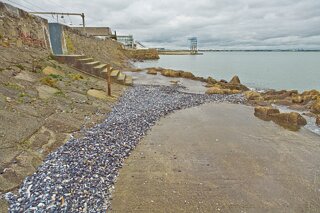
Blackrock Baths Photographed In 2008 Using A Canon Classic 5D
A Photographer’s Perspective
Capturing the stark, decaying beauty of the Irish coastline requires the right tool. Looking back at my archive from February 2008, I shot these frames on the classic Canon 5D. It remains the first truly "good" DSLR I ever owned, and selling it to upgrade to the 1Ds Mark III was a massive misstep—that replacement model was plagued with technical faults from day one. While I still keep that 1Ds Mark III strictly as a manual-mode backup, I recently found an unused 5D Mark III at an unbeatable price, pairing it with my primary contemporary setups: the high-resolution Sony A7R VI and the compact FX30 mirrorless system.
Stepping onto the Dublin coastline with a camera reveals how deeply the elements reshape architecture. Few places illustrate this slow, poetic erosion better than the remains of the Blackrock Baths.
The Rise of a Coastal Icon
Nestled against the shoreline right beside Blackrock railway station, the baths were originally constructed by the local railway company in 1839 to capitalise on the Victorian craze for the health benefits of cold sea-bathing. As popularity soared, the facilities underwent extensive redevelopments. Architect and engineer William Kaye-Parry redesigned them in 1887 as concrete structures featuring dedicated men’s and ladies’ pools encircled by a scenic promenade.
The most transformative upgrade arrived in 1928. To prepare the venue for the swimming, high-diving, and water polo events of the celebrated Tailteann Games, a massive steel grandstand with timber seating was erected. This architectural marvel could accommodate 1,150 spectators. Intriguingly, the design featured glass risers beneath the stadium seating, allowing natural light to filter beautifully into the changing stalls below—a structural choice that created a bright, ethereal atmosphere inside the concrete labyrinth.
The Long Decline
The golden era of the outdoor sea baths drew to a close in the late 20th century. Following the conclusion of the 1986 summer season, the gates closed permanently due to a perfect storm of challenges:
Economic Stagnation: The Irish state faced severe financial difficulties throughout the 1980s, forcing swingeing cutbacks on municipal funding and public amenities.
Shifting Preferences: The advent of modern, indoor, heated swimming pools in hotels and private leisure centres drew crowds away from the unheated, tidal waters of Blackrock.
The Ravages of the Sea: Fully exposed to the brutal Irish Sea, the complex demanded constant, expensive maintenance. Without state funding or structural upkeep, the concrete spalled, the iron railings rusted away, and the pools rapidly silted over.
The 2012 Safety Intervention
After closure, the site was sold to a private property consortium in 1997. Though speculative plans for high-end seafront apartments and commercial plazas were floated, the complex remained locked, derelict, and heavily targeted by graffiti artists for a quarter of a century.
By October 2012, the structure had become an outright hazard. Dún Laoghaire-Rathdown County Council stepped in, declaring the prominent landmarks structurally unsafe due to advanced wind and water erosion. The legendary, multi-tiered 10-metre concrete diving tower—which had birthed generations of Irish diving champions like Eddie Heron—was carefully demolished alongside the unstable viewing gallery.
The outer sea walls, tidal sluice gates, and pool bases were left untouched, not out of oversight, but because their structural stability held no immediate risk to the public and removing them would require an exorbitant budget.
The Present and Future
Today, the footprint of the Blackrock Baths remains a bittersweet, spectral monument on the Dublin coastline. While the shoreline area is still actively monitored for water quality by local authorities, the physical footprint of the baths sits in limbo.
The site serves as a poignant reminder of mid-century civic life—a monument to an era when whole summers were spent on concrete bleachers, and a cold plunge in the Irish Sea was the ultimate urban escape.
A Photographer’s Perspective
Capturing the stark, decaying beauty of the Irish coastline requires the right tool. Looking back at my archive from February 2008, I shot these frames on the classic Canon 5D. It remains the first truly "good" DSLR I ever owned, and selling it to upgrade to the 1Ds Mark III was a massive misstep—that replacement model was plagued with technical faults from day one. While I still keep that 1Ds Mark III strictly as a manual-mode backup, I recently found an unused 5D Mark III at an unbeatable price, pairing it with my primary contemporary setups: the high-resolution Sony A7R VI and the compact FX30 mirrorless system.
Stepping onto the Dublin coastline with a camera reveals how deeply the elements reshape architecture. Few places illustrate this slow, poetic erosion better than the remains of the Blackrock Baths.
The Rise of a Coastal Icon
Nestled against the shoreline right beside Blackrock railway station, the baths were originally constructed by the local railway company in 1839 to capitalise on the Victorian craze for the health benefits of cold sea-bathing. As popularity soared, the facilities underwent extensive redevelopments. Architect and engineer William Kaye-Parry redesigned them in 1887 as concrete structures featuring dedicated men’s and ladies’ pools encircled by a scenic promenade.
The most transformative upgrade arrived in 1928. To prepare the venue for the swimming, high-diving, and water polo events of the celebrated Tailteann Games, a massive steel grandstand with timber seating was erected. This architectural marvel could accommodate 1,150 spectators. Intriguingly, the design featured glass risers beneath the stadium seating, allowing natural light to filter beautifully into the changing stalls below—a structural choice that created a bright, ethereal atmosphere inside the concrete labyrinth.
The Long Decline
The golden era of the outdoor sea baths drew to a close in the late 20th century. Following the conclusion of the 1986 summer season, the gates closed permanently due to a perfect storm of challenges:
Economic Stagnation: The Irish state faced severe financial difficulties throughout the 1980s, forcing swingeing cutbacks on municipal funding and public amenities.
Shifting Preferences: The advent of modern, indoor, heated swimming pools in hotels and private leisure centres drew crowds away from the unheated, tidal waters of Blackrock.
The Ravages of the Sea: Fully exposed to the brutal Irish Sea, the complex demanded constant, expensive maintenance. Without state funding or structural upkeep, the concrete spalled, the iron railings rusted away, and the pools rapidly silted over.
The 2012 Safety Intervention
After closure, the site was sold to a private property consortium in 1997. Though speculative plans for high-end seafront apartments and commercial plazas were floated, the complex remained locked, derelict, and heavily targeted by graffiti artists for a quarter of a century.
By October 2012, the structure had become an outright hazard. Dún Laoghaire-Rathdown County Council stepped in, declaring the prominent landmarks structurally unsafe due to advanced wind and water erosion. The legendary, multi-tiered 10-metre concrete diving tower—which had birthed generations of Irish diving champions like Eddie Heron—was carefully demolished alongside the unstable viewing gallery.
The outer sea walls, tidal sluice gates, and pool bases were left untouched, not out of oversight, but because their structural stability held no immediate risk to the public and removing them would require an exorbitant budget.
The Present and Future
Today, the footprint of the Blackrock Baths remains a bittersweet, spectral monument on the Dublin coastline. While the shoreline area is still actively monitored for water quality by local authorities, the physical footprint of the baths sits in limbo.
The site serves as a poignant reminder of mid-century civic life—a monument to an era when whole summers were spent on concrete bleachers, and a cold plunge in the Irish Sea was the ultimate urban escape.


DERELICT BATHS