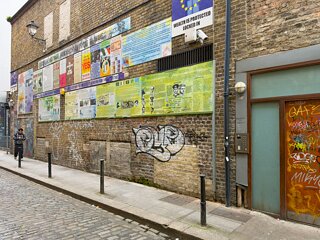
MY FIRST DAY USING THE APPLE iPHONE 18 PRO
RANDOM IMAGES OF TEMPLE BAR CAPTURED USING AN iPHONE 18 PRO [SEPTEMBER 2026]
There is a satisfying numerical symmetry in having the iPhone 18 land on your doorstep on the 18th of September.
Apple officially opened general availability and customer deliveries for the iPhone 18 Pro lineup on Friday, 18 September 2026, making it one of those rare calendar alignments where model generation and launch date match up. For anyone with an appreciation for small coincidences, getting day-one delivery with matching digits feels oddly deliberate on Apple’s part—even if it’s just the product of their traditional mid-September Friday release schedule.
Taking it out the very next day to put the new cameras through their paces against Temple Bar’s textures—cobblestones, wet brick, and dim cellar entrances—is about as fitting a maiden voyage as it gets.
Beyond the Pub: Dublin’s Historic Riverside Quarter
Many first-time visitors to Dublin mistake Temple Bar for nothing more than a single, postcard-famous red-brick public house. In reality, it is one of the city's oldest surviving medieval and early modern quarters. Bounded by the River Liffey to the north and Dame Street to the south, the district takes its name from Sir William Temple—Provost of Trinity College—who built his house and gardens here in the early 17th century on reclaimed land along the riverbank ("bar" referring to a raised estuarine sandbank used for walking).
By the mid-20th century, long before neon signs and stag parties arrived, Temple Bar served as the gritty, practical engine room of Dublin's wholesale trade.
The 1960s Wholesalers and Subterranean Passages: Myth vs Reality
During the 1960s, the cobbled laneways bustled with garment manufacturers, rag merchants, paper suppliers, produce wholesalers, and specialist electronics importers such as ITG (International Trading Company), which supplied high-end hi-fi systems across Ireland.
Popular accounts often romanticise this era with atmospheric descriptions of vast, open cellars and atmospheric underground vaults. The physical reality beneath the flagstones was far more challenging. Because the entire quarter was built directly over the sloblands—unstable river silt and marshy mud reclaimed from the tidal Liffey—early builders had to rely on rudimentary vernacular engineering. Foundations were routinely laid over floating rafts of brushwood fascines, compacted organic matter, and animal detritus (often recalled in local trade lore as resting on "pig bladders") in a desperate bid to stabilise structures and create damp-proof barriers over the shifting mud.
While commercial premises did indeed feature interconnected subterranean passages—engineered so merchants could roll barrels, crates, and electronic stock between properties without choking the narrow streets above—they were brutally utilitarian. Most of these historic cellars have long been permanently inaccessible, heavily waterlogged, or completely flooded by high water tables and tidal river seepage. The transit passages themselves were walled up and blocked off decades ago during corporate acquisitions, fire safety enforcement, and the structural underpinning of the 1990s regeneration.
Today, that subterranean world remains firmly locked away under solid concrete and kerbstones.
Near-Demolition: The CIÉ Central Bus Station Scheme
Throughout the late 1960s and 1970s, Córas Iompair Éireann (CIÉ), the state transport authority, began quietly purchasing swathes of property across the area. Their objective was sweeping: demolish the historic streetscapes to make way for a sprawling central bus depot, complete with underground platforms and shopping arcades.
While awaiting planning consent and state funding, CIÉ let the acquired warehouses on short-term, nominal leases. This administrative delay unintentionally gave birth to modern Dublin's creative heart:
Artists and Independents: Neglected shopfronts and rock-bottom rents quickly drew record shops, darkrooms, rehearsal spaces, vintage clothing stalls, and recording studios.
Civic Resistance: Grassroots campaigns led by architects, residents, and cultural figures mounted fierce opposition, highlighting the district's irreplaceable medieval street footprint.
The turning point came in 1991. Recognizing the organic bohemian community that had taken root, the Irish Government scrapped the transport hub scheme entirely and established Temple Bar Properties to regenerate the enclave as Dublin's designated cultural quarter.
The Temple Bar Pub: Origins and Lineage
The world-renowned pub at the junction of Temple Bar and Temple Lane South adopted the district's name, not the reverse.
The premises was originally licensed in 1835 by Cornelius O’Meara, before spirit dealer James Farley expanded it into a conventional Victorian grocery and spirit house in 1840. For the next 150 years, the pub traded under the names of its successive proprietors:
1880s: P. J. Hartnett
Late 19th Century: Purcell’s, Byrne’s, and Ramsbottom’s
Early 20th Century: Edward Walsh & Co.
1961–1992: Flannery’s, run by William Flannery throughout the wholesale and CIÉ planning era
In 1992, the Cleary family acquired the building, undertaking an extensive refurbishment, expanding across adjoining premises, and officially rebranding it as The Temple Bar Pub—cleverly anchoring the business to the newly minted cultural district rising around it.
There is a satisfying numerical symmetry in having the iPhone 18 land on your doorstep on the 18th of September.
Apple officially opened general availability and customer deliveries for the iPhone 18 Pro lineup on Friday, 18 September 2026, making it one of those rare calendar alignments where model generation and launch date match up. For anyone with an appreciation for small coincidences, getting day-one delivery with matching digits feels oddly deliberate on Apple’s part—even if it’s just the product of their traditional mid-September Friday release schedule.
Taking it out the very next day to put the new cameras through their paces against Temple Bar’s textures—cobblestones, wet brick, and dim cellar entrances—is about as fitting a maiden voyage as it gets.
Beyond the Pub: Dublin’s Historic Riverside Quarter
Many first-time visitors to Dublin mistake Temple Bar for nothing more than a single, postcard-famous red-brick public house. In reality, it is one of the city's oldest surviving medieval and early modern quarters. Bounded by the River Liffey to the north and Dame Street to the south, the district takes its name from Sir William Temple—Provost of Trinity College—who built his house and gardens here in the early 17th century on reclaimed land along the riverbank ("bar" referring to a raised estuarine sandbank used for walking).
By the mid-20th century, long before neon signs and stag parties arrived, Temple Bar served as the gritty, practical engine room of Dublin's wholesale trade.
The 1960s Wholesalers and Subterranean Passages: Myth vs Reality
During the 1960s, the cobbled laneways bustled with garment manufacturers, rag merchants, paper suppliers, produce wholesalers, and specialist electronics importers such as ITG (International Trading Company), which supplied high-end hi-fi systems across Ireland.
Popular accounts often romanticise this era with atmospheric descriptions of vast, open cellars and atmospheric underground vaults. The physical reality beneath the flagstones was far more challenging. Because the entire quarter was built directly over the sloblands—unstable river silt and marshy mud reclaimed from the tidal Liffey—early builders had to rely on rudimentary vernacular engineering. Foundations were routinely laid over floating rafts of brushwood fascines, compacted organic matter, and animal detritus (often recalled in local trade lore as resting on "pig bladders") in a desperate bid to stabilise structures and create damp-proof barriers over the shifting mud.
While commercial premises did indeed feature interconnected subterranean passages—engineered so merchants could roll barrels, crates, and electronic stock between properties without choking the narrow streets above—they were brutally utilitarian. Most of these historic cellars have long been permanently inaccessible, heavily waterlogged, or completely flooded by high water tables and tidal river seepage. The transit passages themselves were walled up and blocked off decades ago during corporate acquisitions, fire safety enforcement, and the structural underpinning of the 1990s regeneration.
Today, that subterranean world remains firmly locked away under solid concrete and kerbstones.
Near-Demolition: The CIÉ Central Bus Station Scheme
Throughout the late 1960s and 1970s, Córas Iompair Éireann (CIÉ), the state transport authority, began quietly purchasing swathes of property across the area. Their objective was sweeping: demolish the historic streetscapes to make way for a sprawling central bus depot, complete with underground platforms and shopping arcades.
While awaiting planning consent and state funding, CIÉ let the acquired warehouses on short-term, nominal leases. This administrative delay unintentionally gave birth to modern Dublin's creative heart:
Artists and Independents: Neglected shopfronts and rock-bottom rents quickly drew record shops, darkrooms, rehearsal spaces, vintage clothing stalls, and recording studios.
Civic Resistance: Grassroots campaigns led by architects, residents, and cultural figures mounted fierce opposition, highlighting the district's irreplaceable medieval street footprint.
The turning point came in 1991. Recognizing the organic bohemian community that had taken root, the Irish Government scrapped the transport hub scheme entirely and established Temple Bar Properties to regenerate the enclave as Dublin's designated cultural quarter.
The Temple Bar Pub: Origins and Lineage
The world-renowned pub at the junction of Temple Bar and Temple Lane South adopted the district's name, not the reverse.
The premises was originally licensed in 1835 by Cornelius O’Meara, before spirit dealer James Farley expanded it into a conventional Victorian grocery and spirit house in 1840. For the next 150 years, the pub traded under the names of its successive proprietors:
1880s: P. J. Hartnett
Late 19th Century: Purcell’s, Byrne’s, and Ramsbottom’s
Early 20th Century: Edward Walsh & Co.
1961–1992: Flannery’s, run by William Flannery throughout the wholesale and CIÉ planning era
In 1992, the Cleary family acquired the building, undertaking an extensive refurbishment, expanding across adjoining premises, and officially rebranding it as The Temple Bar Pub—cleverly anchoring the business to the newly minted cultural district rising around it.
TEMPLE BAR SEPTEMBER 2026