DROGHEDA IS A TOWN RATHER THAN A CITY - WHY
WHY IS DROGHEDA A TOWN RATHER THAN A CITY - RANDOM IMAGES 2026
Drogheda is one of Ireland’s most historic and rapidly expanding urban centres, yet its governance, religious landscape, and industrial infrastructure have seen profound shifts over the past few decades.
Why Drogheda is a Town Rather Than a City
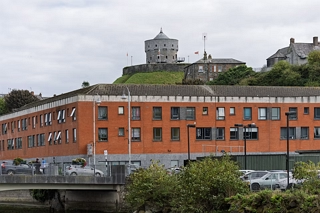
Despite being the largest town in Ireland (ROI) by population—surpassing 44,000 residents in the urban core and exceeding 50,000 across its broader built-up area—Drogheda remains legally classified as a town rather than a city.
Statutory Definition: In the Republic of Ireland, city status is strictly legal rather than determined automatically by population thresholds. The Local Government Act 2001 recognised only five administrative cities: Dublin, Cork, Limerick, Galway, and Waterford (with Kilkenny retaining a ceremonial/historic designation).
Abolition of Boroughs: Drogheda historically held royal charters and status as a county of itself (a county corporate) with its own Borough Corporation. However, the Local Government Reform Act 2014 dissolved all borough councils and town commissions across Ireland, replacing Drogheda's municipal council with a municipal district under county governance.
The County Border Split: A major barrier to official city designation has been administrative geography. Drogheda straddles two counties: the historic centre and north side lie in County Louth, while rapidly growing southern suburbs and estates extend into County Meath. Governance is divided between Louth County Council and Meath County Council, leading to jurisdictional overlap and political hesitation regarding administrative boundaries and revenue sharing. Although campaigns for official city status continue, no formal reclassification has been enacted.
Religious Heritage and the Departure of Monastic Orders
Historically, Drogheda was one of Ireland's primary ecclesiastical hubs. As part of the Catholic Archdiocese of Armagh, it served as the southern seat of the Catholic Primate of All Ireland, housing the national shrine and relic head of the martyr Saint Oliver Plunkett in St Peter’s Catholic Church.
For centuries, religious congregations anchored the town’s civic, healthcare, and educational life:
The Dominicans (Order of Preachers): Established in Drogheda in 1224, the Dominicans maintained an active presence for nearly 800 years until diminishing vocations led to decisions to withdraw friars and close their town centre premises.
Augustinians and Franciscans: Both mendicant orders held friaries and church sites within the medieval walls for generations, shaping the spiritual fabric of the Boyne Valley.
Teaching & Nursing Congregations: Congregations such as the Christian Brothers, the Presentation Sisters, the Sisters of Mercy, and the Medical Missionaries of Mary (founded in Drogheda in 1937) established schools, hospitals, and motherhouses throughout the urban area.
Over the late 20th and early 21st centuries, rapid secularisation, an ageing clergy, and a nationwide collapse in religious vocations forced these orders to consolidate, downsize, or leave the town entirely. Many convent and monastic grounds have since been repurposed for community initiatives, housing, or commercial developments.
The Dublin Port Relocation Plan and Bremore
During the mid-2000s economic boom, a prominent proposal emerged to move commercial and container operations out of Dublin Port and construct a new, world-class deepwater commercial harbour.
The Vision: Drogheda Port Company partnered with private developers to promote Bremore Port, an envisioned deepwater facility located just south of the River Boyne estuary, near the Meath–Dublin border. The concept argued that Dublin Port occupied hundreds of hectares of high-value land that could be converted to residential, commercial, and tech districts, whilst freight operations could be decentralised along the M1 motorway and Belfast–Dublin rail corridor.
Why It Did Not Happen:
Dublin Port Company vigorously resisted any mandated relocation, demonstrating that proximity to Dublin's consumer base reduced freight transport costs, heavy haulage emissions, and distribution bottlenecks.
Dublin Port embarked on its own long-term development masterplans (including the Alexandra Basin Redevelopment and the 3FM Project) to maximise container capacity within its existing footprint.
The financial crash of 2008 halted major private speculative capital, leaving the Bremore deepwater freight terminal shelved in its original form.
Current Status: The Bremore project has since been reimagined, with joint ventures exploring its viability as a specialised offshore wind, green energy, and logistics terminal rather than a full replacement for Dublin Port.
WHY IS DROGHEDA NOT A CITY