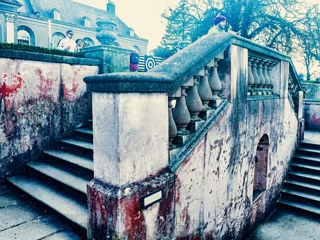
STEPPING THROUGH TIME AT THE FORMAL GARDENS AT THE IRISH MUSEUM OF MODERN ART
Tucked just off Military Road in Dublin 8, the Formal Gardens at the Irish Museum of Modern Art (IMMA) offer one of the capital’s most striking architectural and botanical contrasts. While the galleries inside the Royal Hospital Kilmainham showcase boundary-pushing contemporary work, the 17th-century gardens outside anchor the 48-acre estate in classical symmetry, clipped topiary, and centuries of civic history.
Origins and Reconstruction
Laid out alongside the Royal Hospital Kilmainham—founded in 1684 by James Butler, Duke of Ormonde, and designed by Sir William Robinson as a retirement home for military veterans—the grounds reflect the formal Anglo-Dutch landscaping traditions of the late 17th century. Modelled in spirit on grand European institutional estates like Les Invalides in Paris, the gardens were originally conceived as a place of quiet restoration and structured order for the hospital's residents.
Over the following centuries, as the military infirmary declined and eventually closed in 1928, the landscaped parterres fell into disrepair. Ahead of the Royal Hospital’s tercentenary in 1984—and prior to IMMA opening its doors in May 1991—the Office of Public Works (OPW) undertook an extensive restoration. Working from historic maps and surviving stonework, gardeners and conservationists reconstructed the sunken parterres, gravel walks, and boundary walls to revive the estate's 17th-century geometry.
Key Architectural and Botanical Features
Walking down the stone steps into the Formal Gardens reveals a space organised around strict axial sightlines and layered textures:
Sunken Parterres and Box Hedging: Low, precisely trimmed boxwood borders frame geometric beds of seasonal flowers, herbs, and manicured turf, creating crisp visual patterns best appreciated from the upper terraces.
The Central Fountain and Stone Balustrades: A grand tiered fountain acts as the visual anchor at the intersection of the main gravel walkways, flanked by weathered limestone balustrades, urns, and obelisks.
The Master's Garden and Historic Walls: Sheltered by high brick and stone walls—which create a warm microclimate for espaliered fruit trees and herbaceous borders—the adjoining Master's Garden preserves historical relics from across Dublin, including three stone cherubs rescued from the plinth of Queen Victoria's statue when it was removed from Leinster House in 1948.
Outdoor Sculpture Installations: True to IMMA’s curatorial mission, contemporary sculptures appear unexpectedly against the classical backdrop. Modern bronze, steel, and stone works punctuate the lawns and perimeter paths, setting up a quiet visual dialogue between 17th-century order and 21st-century artistic experimentation.
Visiting and Photographing the Gardens
Because the gardens are maintained by the OPW as part of the wider Royal Hospital Kilmainham grounds, admission is completely free. The space shifts character dramatically across the seasons: in high summer, the beds burst with colour and scent, whereas in late autumn and winter, the stripped-back evergreen hedging, damp gravel, and bare limestone take on an austere, sculptural clarity.
For architectural and street photographers, the eastern and southern terraces provide elevated vantage points looking across the parterres back toward the classical facade of the Royal Hospital. Early morning light rakes cleanly across the clipped topiary and stone steps before afternoon visitors arrive, while overcast Dublin skies bring out the rich tones in the weathered masonry and deep greens of the yew and boxwood.


FORMAL GARDENS 2021