DUBLIN FIRE BRIGADE IN ACTION 2 OCTOBER 2026
Six Engines at the Bridge: The Anatomy of a Dublin Fire Brigade False Alarm
Stepping out onto the south quays after a meal at Eatokyo, the distinctive chorus of high-decibel two-tone sirens echoed along the River Liffey. Within moments, a heavy convoy of Dublin Fire Brigade appliances surged across the river, arriving at the north landing of the Ha'penny Bridge before pedestrians could even cross the footbridge.
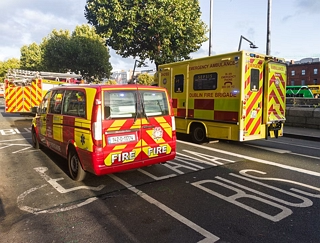
Six emergency vehicles quickly fanned out along Bachelors Walk, bringing an immediate sense of drama to the evening thoroughfare. Yet, barely fifteen minutes later, every engine had packed up and departed, leaving the river corridor as calm as it had been before the sirens sounded.
The Tell-Tale Signs of a Fast Stand-Down
To a passing observer, the sudden arrival of six front-line units looks like a catastrophic emergency. However, the scene bore all the operational hallmarks of an automated commercial alarm or a high-density residential call that resolved itself almost immediately. Across the street, the open windows of a prominent multi-storey apartment block offered an instant clue: likely burnt food or smoke clearing after a call-point activation.
When dealing with large residential complexes or multi-occupancy city-centre buildings, Dublin Fire Brigade’s dispatch system relies on a Pre-Determined Attendance (PDA). Rather than waiting to see if smoke turns to flame, emergency control immediately mobilises a full strike force:
- Multiple pumping appliances responding simultaneously from nearby stations like Tara Street and Phibsborough.
- Aerial ladder and turntable equipment for upper-floor rescues.
- A dedicated DFB emergency ambulance.
- Incident command and support units, such as the district officer's van taking point on the road.
The 45-Degree Fend-Off
One noticeable detail was the way the fire appliances positioned themselves at sharp 45-degree angles across the bus lane and road surface. In emergency service training, this is standard defensive driving known as a "fend-off" position.
Angling heavy vehicles creates an armored physical buffer that deflects errant traffic away from the scene, safeguarding firefighters, paramedics, and alighting personnel as they operate. It also preserves an immediate exit pathway so appliances are not hemmed in should a rapid repositioning or redeployment be required.
Why the Swift Exit?
In an incident like this, the first-arriving officer conducts an immediate size-up and inspects the fire alarm panel or speaks with building management. The moment it is determined that the cause was steam, a scorched meal, or an accidental push of the emergency break-glass unit, an immediate "stop message" goes out across the radio network.
Once the all-clear is confirmed, protocols dictate clearing the corridor without delay. On Dublin’s central quays, leaving half a dozen large appliances parked on primary arterial roads causes instant gridlock. Within a quarter of an hour, the incident was closed, the sirens fell silent, and the quayside returned to normal evening traffic.
FALSE ALARM